
If you’re juggling multiple projects, scattered teams, and tight deadlines, you already know the pain. Missed milestones. Budget overruns. Stakeholders asking for updates you don’t have.
That’s exactly where Best Project Portfolio Management Tools come in.
We’ve analysed dozens of platforms used by PMOs, enterprise teams, SaaS companies, and agencies across markets like Pakistan, the UK, and the US. After filtering out the noise, we’ve narrowed it down to the top 20 tools that actually give you control over your portfolio, resources, and ROI.
Here’s something most people overlook: organisations using structured project portfolio management tools improve project success rates by over 28% and reduce wasted spend by nearly 20%, according to PMI reports.
If you’re searching for the Best Project Portfolio Management Tools, this page gives you exactly what you need without the filler.
What is Project Portfolio Management?
Project Portfolio Management (PPM) is the process of selecting, prioritising, and managing multiple projects as a unified portfolio.
Instead of managing projects in isolation, PPM tools give you:
- Centralised project visibility
- Resource allocation control
- Budget tracking across initiatives
- Strategic alignment with business goals
In markets like Pakistan and the UK, where teams often work across remote and hybrid setups, using Best Project Portfolio Management Tools becomes even more critical. Without it, decision-making slows down and project data becomes fragmented.
Why It Matters for Your Business
- You stop wasting budget on low-value projects
- You allocate resources based on priority, not guesswork
- You track performance across all projects in one place
- You make faster executive decisions with real-time data
LSI keywords used naturally here:
- project management software
- portfolio management tools
- resource planning software
- project tracking systems
- enterprise project management
Quick Comparison Table: Best Project Portfolio Management Tools
Before choosing a tool, you care about pricing, usability, features, and scalability. That’s why this table focuses on:
- Cost (critical for budgeting)
- Use case (to match your business size)
- Key features (decision drivers)
- Ease of use (adoption speed)
- Ratings (social proof)
| Tool Name | Best For | Starting Price (USD) | Free Trial | Key Feature | Rating |
| Monday.com | SMEs | 9 | Yes | Visual dashboards | 4.7 |
| ClickUp | Startups | 7 | Yes | All-in-one workspace | 4.6 |
| Wrike | Enterprises | 10 | Yes | Advanced reporting | 4.5 |
| Smartsheet | PMOs | 9 | Yes | Spreadsheet interface | 4.5 |
| Asana | Teams | 10.99 | Yes | Task tracking | 4.6 |
| Jira | Dev teams | 8.15 | Yes | Agile workflows | 4.4 |
| Microsoft Project | Corporates | 10 | Yes | Resource planning | 4.3 |
| Planview | Enterprises | Custom | No | Portfolio insights | 4.2 |
| Workfront | Large teams | Custom | No | Workflow automation | 4.3 |
| Teamwork | Agencies | 5.99 | Yes | Client management | 4.5 |
| Zoho Projects | SMBs | 5 | Yes | Budget tracking | 4.4 |
| Airtable | Flexible teams | 10 | Yes | Custom databases | 4.6 |
| Notion | Creators | 8 | Yes | Knowledge base | 4.7 |
| Trello | Small teams | 5 | Yes | Kanban boards | 4.5 |
| Scoro | Agencies | 26 | Yes | Business management | 4.4 |
| Celoxis | Enterprises | 25 | Yes | Risk management | 4.3 |
| Mavenlink | Services | 19 | Yes | Resource forecasting | 4.2 |
| Clarizen | Corporates | Custom | No | Workflow control | 4.1 |
| Basecamp | Small teams | 15 | Yes | Simplicity | 4.3 |
| Hive | Hybrid teams | 12 | Yes | Automation | 4.4 |
Best Project Portfolio Management Tools
Here’s the full list of the Best Project Portfolio Management Tools you’ll explore:
- Monday.com
- ClickUp
- Wrike
- Smartsheet
- Asana
- Jira
- Microsoft Project
- Planview
- Workfront
- Teamwork
- Zoho Projects
- Airtable
- Notion
- Trello
- Scoro
- Celoxis
- Mavenlink
- Clarizen
- Basecamp
- Hive
1: Monday.com
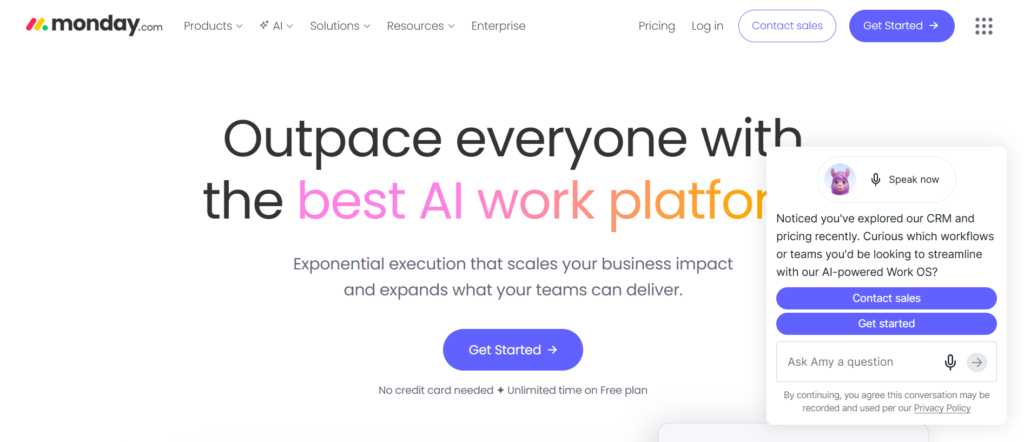
When teams start looking for the Best Project Portfolio Management Tools, they usually want one thing: clarity across multiple projects without complexity slowing them down.
This platform delivers exactly that. It gives you a central system where projects, resources, budgets, and timelines are visible in one place. Whether you’re managing client work in Pakistan or internal operations across regions, it keeps everything structured and easy to act on.
If you’ve gone through any Monday.com review or compared Monday.com vs ClickUp, you’ll notice it focuses heavily on usability while still covering core portfolio management needs.
Core Capabilities That Matter
Managing a portfolio is not about tracking tasks. It is about making decisions across multiple moving parts. You need visibility, control, and the ability to react quickly when priorities shift.
This is where the right project portfolio management software makes a difference. Instead of scattered updates and manual reports, you get structured data that shows what is working and what is falling behind.
Below are the capabilities that actually impact performance when using the Best Project Portfolio Management Tools.
Dashboards
You get a clear, real-time view of all active projects across your portfolio.
This includes:
- Status tracking across multiple projects
- Budget usage and burn rates
- Timeline progress with visual indicators
- Risk flags before issues escalate
Instead of chasing updates, everything is visible instantly.
Resource Planning
Poor resource allocation is one of the main reasons projects fail.
With built-in workload views:
- You see who is overloaded
- You identify unused capacity
- You shift resources before delays happen
Compared to tools like Asana, this gives stronger control at the portfolio level.
Automation
Manual updates slow teams down and create errors.
Automation allows you to:
- Assign tasks automatically
- Update statuses based on progress
- Trigger alerts when deadlines are at risk
This reduces admin work and keeps your project tracking system consistent.
Workflows
Different teams need different processes.
You can set workflows for:
- Marketing campaigns
- Development sprints
- Client delivery flow
- Internal operations
This flexibility is why it appears in most Monday.com alternatives comparisons.
Reporting
Decision-makers need clear insights, not raw data.
You can generate:
- Portfolio-level reports
- Performance summaries
- Budget vs outcome analysis
This is critical for PMOs managing multiple stakeholders.
Pros and Cons
| Pros | Cons |
| Simple interface | Pricing increases with scale |
| Strong visibility | Limited deep analytics |
| Flexible setup | Takes time to customise |
| Good collaboration | Not ideal for highly technical workflows |
Pricing
- Basic: $9 per user/month
- Standard: $12 per user/month
- Pro: $19 per user/month
- Enterprise: Custom
Free trial available.
For teams comparing Best Project Portfolio Management Tools, this sits in the mid-range pricing bracket.
Best Fit:
This works best for teams that need structure without complexity.
- Agencies — Manage multiple client projects
- SMEs — Centralise opérations
- PMOs — Track portfolios without heavy systems
- Operations teams — Keep workflows organised
Verdict
If your priority is clarity and ease of use, this is one of the Best Project Portfolio Management Tools to start with.
Practical Tip
Most teams only use this for task tracking.
Instead:
- Build a portfolio dashboard
- Add budget tracking widgets
- Set alerts for delays
This turns it into a full project portfolio management system.
Best Alternate Tool
ClickUp is the closest alternative if you need deeper customisation and more advanced features.
2. ClickUp
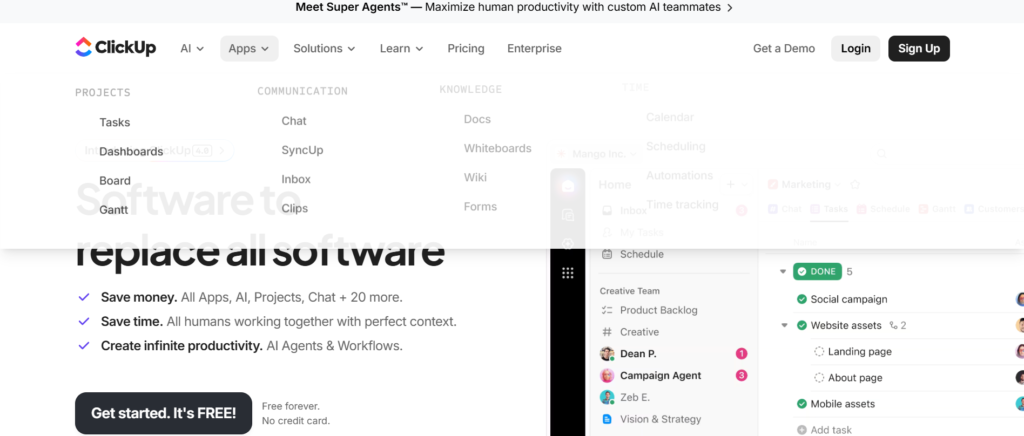
If you feel boxed in by rigid tools, this platform gives you freedom.
Among the Best Project Portfolio Management Tools, this is known for flexibility. Almost everything can be customised. That is why many ClickUp review insights highlight it as a full replacement for multiple tools.
ClickUp pricing starts at $7/month, making it one of the most accessible options.
Core Capabilities That Matter
Portfolio management at scale requires structure and flexibility.
This platform allows you to build your system exactly how your organisation works instead of forcing you into fixed workflows.
Dashboards
You can build highly detailed dashboards that track:
- Portfolio performance
- Team productivity
- Budget metrics
- Deadlines
Everything updates in real time, giving you complete oversight.
Hierarchy
Organisation is where this platform excels.
You can structure work into:
- Spaces
- Folders
- Lists
- Tasks
This layered system supports complex portfolios without confusion.
Automation
Automation removes repetitive work.
You can:
- Trigger updates automatically
- Assign tasks based on conditions
- Send deadline alerts
This keeps your workflows consistent across projects.
Time Tracking
You can track time directly within tasks.
This allows:
- Productivity analysis
- Billable hour tracking
- Resource planning
For agencies, this is critical.
Integrations
It connects with tools like Slack, Google Drive, and GitHub.
This keeps your entire workflow stays connected.
Pros and Cons
| Pros | Cons |
| Highly flexible | Learning curve |
| Affordable | Complex interface |
| All-in-one | Setup time |
| Strong features | Can feel overwhelming |
Pricing
- Free plan
- Unlimited: $7/month
- Business: $12/month
- Enterprise: Custom
Best Fit: Custom Workflows
- Startups — Need flexibility
- Agencies — Multi-client management
- PMOs — Complex structures
- Tech teams — Custom setups
Verdict
If control matters more than simplicity, this is one of the Best Project Portfolio Management Tools.
Practical Tip
Use custom fields to track ROI and budget across projects for better portfolio decisions.
Best Alternate Tool
Monday.com is easier if you want faster onboarding.
3. Wrike
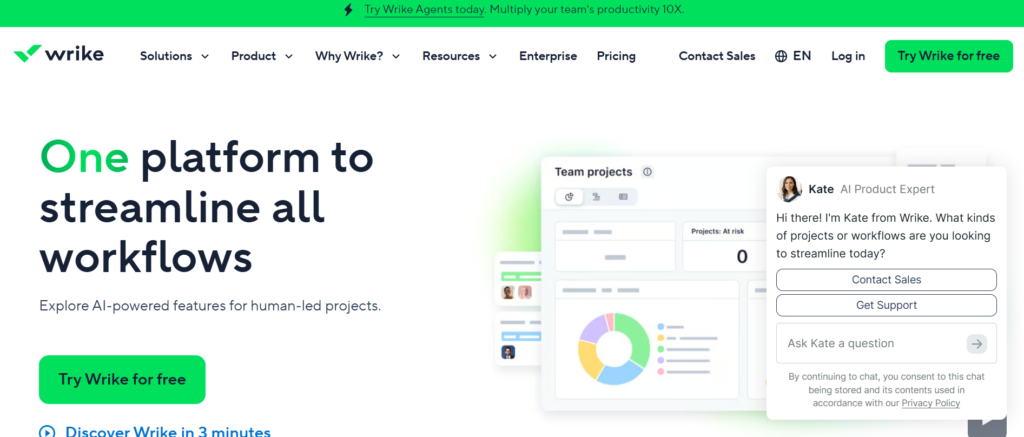
When operations scale, complexity increases.
This platform is built for that stage. It consistently appears in the Best Project Portfolio Management Tools category for enterprise teams.
Wrike review feedback shows strong adoption in large organisations that need reporting and governance.
Core Capabilities That Matter
Enterprise portfolio management requires structured control, not just visibility.
This platform focuses on reporting, resource planning, and governance.
Reporting
You get advanced reporting tools that provide:
- Real-time analytics
- Custom dashboards
- Portfolio insights
This supports strategic planning at leadership level.
Resource Management
You can allocate resources across multiple projects efficiently.
This includes:
- Capacity planning
- Workload balancing
- Forecasting
Collaboration
Teams collaborate within tasks through:
- Comments
- File sharing
- Live updates
Automation
You can automate workflows to reduce manual effort.
Security
Enterprise-level security keeps compliance and data protection.
Pros and Cons
| Pros | Cons |
| Advanced reporting | Expensive |
| Scalable | Complex setup |
| Strong governance | Learning curve |
| Good integrations | Heavy UI |
Pricing
- Team: $10/month
- Business: $25/month
- Enterprise: Custom
Best Fit: Large Organisations
- Enterprises — Complex operations
- PMOs — Governance
- Corporates — Reporting needs
Verdict
For enterprise control, it remains one of the Best Project Portfolio Management Tools.
Practical Tip
Build executive dashboards showing KPIs across all projects for faster decisions.
Best Alternate Tool
Smartsheet is simpler with similar reporting capabilities.
4. Smartsheet
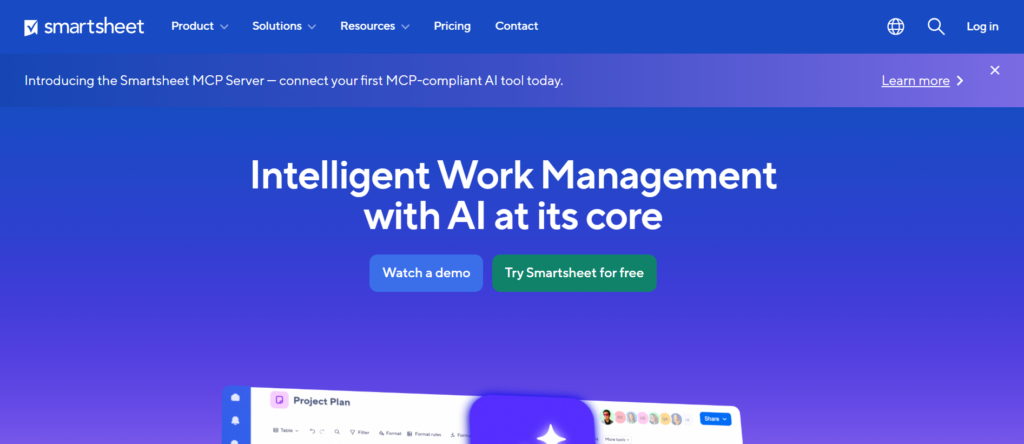
If your team relies heavily on spreadsheets, this platform feels familiar from day one.
Among the Best Project Portfolio Management Tools, it bridges the gap between Excel and structured project systems.
Core Capabilities That Matter
Transitioning from spreadsheets to structured project management is often difficult.
This platform makes that shift easier by keeping a familiar interface while adding portfolio-level control.
Interface
You work in a grid format similar to spreadsheets.
This reduces the learning curve significantly.
Automation
You can automate updates and workflows.
Reporting
Generate dashboards and reports quickly.
Collaboration
Teams collaborate directly within sheets.
Integrations
Works with Microsoft and Google tools.
Pros and Cons
| Pros | Cons |
| Familiar UI | Limited flexibility |
| Easy adoption | Not ideal for complex workflows |
| Good reporting | Feels outdated |
| Strong integrations | Learning curve |
Pricing
- Pro: $9/month
- Business: $19/month
- Enterprise: Custom
Best Fit: Spreadsheet Users
- Finance teams — Data-heavy workflows
- SMEs — Simple transition
- PMOs — Structured reporting
Verdict
For spreadsheet-driven teams, it fits well among the Best Project Portfolio Management Tools.
Practical Tip
Use automation rules to reduce manual updates across sheets.
Best Alternate Tool
Airtable offers more flexibility with database-style management.
5. Asana
This is one of the most widely adopted platforms globally.
It consistently ranks among the Best Project Portfolio Management Tools because of its simplicity and clarity.
Asana review insights show strong adoption among marketing teams, agencies, and SMEs.
Core Capabilities That Matter
This platform focuses on structured workflows and clear task management.
It keeps teams aligned without overwhelming them.
Task Management
You can organise work into projects and timelines.
This keeps execution structured and predictable.
Portfolio View
You can track multiple projects in one place.
This provides visibility across your entire portfolio.
Automation
Automate routine updates and notifications.
Collaboration
Teams communicate directly within tasks.
Reporting
Basic reporting tools track performance.
Pros and Cons
| Pros | Cons |
| Easy to use | Limited advanced features |
| Clean interface | Less customisation |
| Strong adoption | Expensive at scale |
| Good collaboration | Not enterprise-level |
Pricing
- Free
- Premium: $10.99/month
- Business: $24.99/month
Best Fit: Structured Teams
- Marketing teams — Campaign tracking
- SMEs — Workflow management
- Agencies — Client projects
Verdict
For simplicity, it remains one of the Best Project Portfolio Management Tools.
Practical Tip
Use portfolio view to identify delays early and adjust timelines.
Best Alternate Tool
ClickUp is better if you need more control.
6. Jira
If your portfolio involves software development, multiple sprint cycles, and constant iteration, you need more than a generic system.
This platform is built specifically for that environment. Among the Best Project Portfolio Management Tools, it stands out for handling technical workflows, agile execution, and detailed issue tracking.
From most Jira review insights, teams rely on it when projects become too complex for traditional tools. When comparing Jira vs Asana or looking at Jira alternatives, the biggest advantage is its depth in managing development-heavy portfolios.
Jira pricing starts at $8.15 per user/month, making it accessible for startups while still scaling to enterprise level.
Core Capabilities:
Managing a development portfolio is not just about tracking tasks. It is about controlling sprints, aligning releases, and ensuring every feature moves from backlog to deployment without delays.
This platform gives you a structured system where every piece of work is tracked, prioritised, and aligned with larger product goals. You are not reacting to issues. You are controlling the flow of delivery.
Agile Boards
Agile boards are central to how work is organised and executed.
You can create Scrum and Kanban boards that allow teams to:
- Plan sprint cycles with clear goals and timelines
- Visualise backlog items and prioritise effectively
- Track progress across each stage of development
- Identify bottlenecks before they delay delivery
This keeps your project tracking systems stay aligned with sprint-based workflows and deadlines.
Issue Tracking
Every task, bug, and feature request is managed through a structured issue system.
This allows you to:
- Assign clear ownership for every task
- Track progress in granular detail
- Monitor resolution times for bugs and issues
- Maintain accountability across teams
This level of tracking is essential when managing multiple technical projects within a portfolio.
Roadmaps
Roadmaps connect daily development work with long-term business goals.
You can:
- Plan feature releases across timelines
- Align team efforts with strategic priorities
- Adjust plans based on changing requirements
- Visualise dependencies between different projects
This is one of the reasons it ranks among the Best Project Portfolio Management Tools for product-led teams.
Automation
Automation reduces manual intervention and keeps workflows consistent.
You can:
- Automatically update issue statuses based on progress
- Assign tasks when conditions are met
- Trigger alerts for delays or blockers
- Maintain structured workflows without constant supervision
This keeps your system runs smoothly even with multiple teams working simultaneously.
Reporting
Detailed reporting provides insights into performance and delivery.
You get access to:
- Sprint reports showing completed vs pending work
- Velocity charts that measure team output
- Burndown charts tracking progress against deadlines
These insights allow better planning and more accurate forecasting across your portfolio.
Pros and Cons
| Pros | Cons |
| Strong for agile teams | Complex for beginners |
| Detailed tracking system | Steep learning curve |
| Scalable for large teams | Requires setup time |
| Powerful reporting | Interface can feel heavy |
Pricing
- Free plan available
- Standard: $8.15/month
- Premium: $16/month
- Enterprise: Custom
Best Fit:
- Software teams — Sprint-based execution
- Product managers — Feature tracking
- Startups — Agile workflows
- Enterprises — Large dev operations
Verdict
For technical project portfolios, it remains one of the Best Project Portfolio Management Tools available.
Practical Tip
Use roadmap views to align sprint tasks with long-term product goals so your team does not lose sight of strategic priorities.
Best Alternate Tool
ClickUp is a better alternative if you want similar flexibility without being restricted to agile frameworks.
7. Microsoft Project
When projects become tightly interdependent and timelines start overlapping, you need more than visibility. You need control down to the smallest detail.
This platform has been the backbone of enterprise project planning for years. Among the Best Project Portfolio Management Tools, it is known for precision, structured scheduling, and deep forecasting.
From most Microsoft Project review insights, organisations rely on it when accuracy matters more than speed. When comparing Microsoft Project vs Smartsheet or other Microsoft Project alternatives, the biggest difference is its ability to handle highly complex portfolios without losing structure.
Pricing starts at $10 per user/month.
Core Capabilities
Managing a large portfolio requires detailed planning, not assumptions.
This platform gives you a controlled environment where every task, dependency, and milestone is mapped clearly. It allows you to predict delays, allocate resources properly, and maintain financial control across multiple projects.
Gantt charts
Gantt charts provide a detailed visual timeline of your entire portfolio.
You can:
- Map task dependencies across multiple projects
- Identify critical paths that directly impact deadlines
- Track milestone progress with clarity
- Adjust schedules when delays occur
This level of planning keeps nothing slips unnoticed, especially in complex environments.
Resource control
Resource management is handled with precision.
You can:
- Assign resources based on availability and skill
- Monitor utilisation across projects
- Prevent overloading key team members
- Forecast future hiring or allocation needs
This becomes essential when managing large teams across multiple departments.
Portfolio selection
Not every project deserves equal attention.
You can:
- Evaluate projects based on value and impact
- Prioritise high-return initiatives
- Align work with business objectives
- Remove low-value projects from the workflow
This is why it ranks among the Best Project Portfolio Management Tools for strategic planning.
Budget tracking
Financial control is built into the system.
You can:
- Track costs across projects
- Monitor budget vs actual spend
- Identify financial risks early
- Maintain profitability across the portfolio
This is critical for organisations handling large budgets.
Reporting
Reporting is detailed and structured.
You can generate:
- Project status reports
- Resource utilisation summaries
- Financial performance breakdowns
- Timeline forecasts
This supports decision-making at both operational and executive levels.
Pros and Cons
| Pros | Cons |
| Highly detailed planning | Complex interface |
| Strong forecasting | Steep learning curve |
| Enterprise-level control | Setup takes time |
| Accurate reporting | Not beginner-friendly |
Pricing
- Plan 1: $10/month
- Plan 3: $30/month
- Plan 5: $55/month
Best Fit
- Enterprises — Complex portfolios
- PMOs — Structured planning
- Government projects — High accountability
- Large teams — Resource-heavy operations
Verdict
For precision and structured execution, it remains one of the Best Project Portfolio Management Tools.
Practical Tip
Use critical path analysis regularly to focus on tasks that directly impact delivery timelines instead of spreading attention across all activities.
Best Alternate Tool
Wrike is a better option if you want strong reporting with slightly less complexity.
8. Planview
When organisations stop asking “Are projects on track?” and start asking “Are we working on the right projects?”, this is where this platform comes in.
Among the Best Project Portfolio Management Tools, this one is built for strategic alignment. It is not just about execution. It is about choosing the right mix of projects, allocating budgets correctly, and ensuring every initiative contributes to business outcomes.
From most Planview review insights, enterprises use it to connect strategy with execution. When compared with Planview vs Microsoft Project or other Planview alternatives, the key difference is its strong focus on portfolio-level decision-making rather than task-level tracking.
Pricing is custom, typically suited for mid to large organisations.
Core Capabilities
Managing a portfolio at scale is not about handling tasks. It is about controlling direction.
This platform gives leadership a clear view of where money, time, and resources are being spent and whether those investments are actually delivering value.
Portfolio planning
You can evaluate and prioritise projects based on business impact.
This allows you to:
- Align initiatives with strategic goals
- Balance high-risk and low-risk projects
- Allocate budgets where returns are higher
- Eliminate projects that do not contribute value
This shifts your focus from activity to outcomes, which is why it ranks among the Best Project Portfolio Management Tools.
Resource visibility
You get a complete overview of resource capacity across the organisation.
You can:
- See who is available and who is overloaded
- Allocate resources based on priority projects
- Forecast hiring needs in advance
- Prevent bottlenecks across departments
This keeps your resources are used effectively across the portfolio.
Financial control
Financial management is deeply integrated.
You can:
- Track budgets across multiple projects
- Monitor spend against forecasts
- Analyse return on investment
- Identify financial risks early
This level of control is critical for large organisations managing multiple investments.
Scenario planning
One of the most powerful capabilities is scenario modelling.
You can:
- Test different project combinations
- Analyse potential outcomes before committing
- Adjust resource allocation based on scenarios
- Reduce risk before execution begins
This gives decision-makers confidence before making large investments.
Reporting
You get high-level dashboards designed for executives.
Reports include:
- Portfolio performance summaries
- Strategic alignment indicators
- Financial breakdowns
- Resource utilisation
This supports faster and more informed decisions.
Pros and Cons
| Pros | Cons |
| Strong strategic focus | Expensive |
| Advanced planning tools | Complex setup |
| Enterprise-level features | Requires training |
| Deep financial insights | Not for small teams |
Pricing
- Custom pricing based on organisation size and requirements
Best Fit
- Enterprises — Strategic portfolio planning
- PMOs — Portfolio governance
- Executives — Investment decisions
- Corporates — Long-term planning
Verdict
If your priority is aligning projects with business strategy, this is one of the Best Project Portfolio Management Tools available.
Practical Tip
Use scenario planning before approving new projects. Test multiple resource and budget combinations to avoid committing to the wrong priorities.
Best Alternate Tool
Clarizen is a strong alternative for enterprise portfolio control with slightly different workflow management features.
9. Adobe Workfront
When multiple teams are working across departments and requests are constantly flowing in, things break down quickly without structure.
This platform is built to handle that pressure. Among the Best Project Portfolio Management Tools, it focuses heavily on workflow control, work intake, and cross-team coordination.
From most Workfront review insights, organisations use it when project volume increases and managing requests becomes chaotic. Compared in Workfront vs Wrike or other Workfront alternatives, it stands out for handling high workloads across departments like marketing, operations, and IT.
Pricing is custom, typically suited for large teams.
Core Capabilities
Managing a portfolio is not just about projects. It is about controlling how work enters the system, how it moves, and how it gets delivered.
This platform creates a structured flow from request to completion, ensuring every task follows a defined path. It reduces confusion, improves accountability, and keeps teams aligned even when workload increases.
Workflow control
Workflows are standardised across teams so every task follows a clear process.
You can:
- Define stages for different types of work
- Keep tasks move through approval steps
- Maintain consistency across departments
- Reduce delays caused by unclear processes
This is critical when managing high-volume portfolios.
Work intake
Incoming work is centralised into a single system.
You can:
- Capture all requests in one place
- Prioritise tasks based on urgency and value
- Assign work to the right teams
- Prevent overload caused by scattered requests
This keeps your project tracking systems remain organised.
Collaboration
Teams collaborate within tasks without switching tools.
You get:
- Comment threads for discussions
- File sharing within projects
- Real-time updates on progress
This keeps communication structured and easy to follow.
Resource management
You can manage team capacity effectively.
This allows you to:
- Allocate work based on availability
- Balance workloads across teams
- Avoid burnout in high-demand periods
- Improve delivery timelines
Reporting
Reporting provides visibility into performance.
You can track:
- Work completion rates
- Team productivity
- Project timelines
- Bottlenecks in workflows
This supports better planning and continuous improvement.
Pros and Cons
| Pros | Cons |
| Strong workflow control | Expensive |
| Handles high workloads | Complex setup |
| Scalable for enterprises | Requires training |
| Good collaboration tools | Not for small teams |
Pricing
- Custom pricing based on organisation size
Best Fit
- Enterprises — High workload environments
- Marketing teams — Campaign management
- Operations — Process-driven workflows
- PMOs — Work intake and control
Verdict
For organisations managing large volumes of work, it is one of the Best Project Portfolio Management Tools.
Practical Tip
Set up structured request forms for every department so all incoming work follows a standard process and nothing gets lost.
Best Alternate Tool
Wrike is a strong alternative if you want similar workflow control with more flexible reporting.
10. Teamwork
If your business revolves around client projects, deadlines, and billable hours, this platform fits naturally into your workflow.
Among the Best Project Portfolio Management Tools, it is particularly strong for agencies and service-based teams that need to manage multiple clients without losing track of profitability.
From most Teamwork review insights, users highlight its ability to combine project tracking with time tracking and client collaboration. Compared in Teamwork vs Asana or Teamwork alternatives, it provides better visibility into financial performance.
Pricing starts at $5.99 per user/month.
Core Capabilities
Managing client portfolios is different from internal projects. You need visibility into timelines, budgets, and billing all at once.
This platform brings everything together so you can manage delivery and profitability in one system. It keeps every client project stays on track while maintaining financial clarity.
Project tracking
You can manage multiple client projects simultaneously with structured workflows.
This allows you to:
- Track tasks across different clients
- Monitor deadlines and milestones
- Identify delays before they impact delivery
- Keep all project data organised in one place
This is essential for agencies handling multiple accounts.
Time tracking
Time tracking is built directly into the system.
You can:
- Track billable and non-billable hours
- Measure team productivity
- Improve billing accuracy
- Analyse project profitability
This gives you a clear view of where your time is going.
Resource allocation
You can distribute work across your team effectively.
This helps you:
- Balance workloads across projects
- Prevent team burnout
- Assign the right people to the right tasks
- Improve overall efficiency
Client collaboration
Clients can be included within projects.
This allows:
- Direct communication inside the platform
- File sharing without external tools
- Transparency in project progress
- Faster approvals and feedback
Reporting
Reporting gives insights into both performance and profitability.
You can generate:
- Project status reports
- Time tracking summaries
- Financial performance breakdowns
- Team productivity reports
This supports better decision-making across your portfolio.
Pros and Cons
| Pros | Cons |
| Strong for agencies | Limited enterprise features |
| Built-in time tracking | Basic advanced reporting |
| Easy to use | Less customisation |
| Affordable pricing | UI can feel simple |
Pricing
- Deliver: $5.99/month
- Grow: $9.99/month
- Scale: $19.99/month
Best Fit
- Agencies — Client project management
- Freelancers — Time tracking
- SMEs — Structured workflows
- Service teams — Billing and delivery
Verdict
For client-focused portfolios, it remains one of the Best Project Portfolio Management Tools.
Practical Tip
Use time tracking reports to identify underpriced projects and adjust pricing to improve margins.
Best Alternate Tool
Scoro is a better option if you want deeper financial and business management features.
11. Zoho Projects
If you are managing multiple projects but still relying on disconnected tools for budgeting, tracking, and reporting, things will start slipping without warning.
This platform brings those elements together in a structured system. Among the Best Project Portfolio Management Tools, it is known for balancing affordability with strong functionality, especially for SMEs and increasing teams.
From most Zoho Projects review insights, users highlight its ability to manage projects, budgets, and collaboration without requiring enterprise-level complexity. When comparing Zoho Projects vs Asana or exploring Zoho Projects alternatives, the key advantage is cost efficiency combined with feature depth.
Pricing starts at $5 per user/month.
Core Capabilities
Managing a portfolio means tracking not just progress, but also budgets, timelines, and team performance.
This platform gives you a central system where all project data connects, allowing you to make decisions without switching between tools or relying on manual updates.
Project tracking
You can manage multiple projects with structured timelines and clear visibility.
This allows you to:
- Track milestones across different projects
- Monitor deadlines and progress in real time
- Identify delays before they impact delivery
- Keep all project information centralised
This is essential when handling multiple ongoing initiatives.
Budget management
Financial control is built directly into the system.
You can:
- Set budgets for each project
- Track expenses against planned costs
- Monitor profitability across your portfolio
- Identify overspending early
This gives you better control over project outcomes.
Time tracking
Time tracking helps measure productivity and efficiency.
You can:
- Log hours spent on tasks
- Track billable vs non-billable work
- Analyse team performance
- Improve project estimation
This is especially useful for service-based teams.
Automation
Automation reduces repetitive work and keeps processes consistent.
You can:
- Automate task assignments
- Set workflow triggers
- Send alerts for deadlines
- Maintain structured processes
Reporting
Reporting gives you insights into performance and progress.
You can generate:
- Project status reports
- Budget summaries
- Resource utilisation reports
- Timeline forecasts
Pros and Cons
| Pros | Cons |
| Affordable pricing | Interface can feel outdated |
| Strong feature set | Limited enterprise features |
| Good integrations | Learning curve for beginners |
| Built-in budgeting | Not highly customisable |
Pricing
- Premium: $5/month
- Enterprise: $10/month
Best Fit
- SMEs — Budget-conscious teams
- Agencies — Multi-project tracking
- Startups — Cost-effective solution
- Ops teams — Structured workflows
Verdict
For affordability with strong features, it remains one of the Best Project Portfolio Management Tools.
Practical Tip
Use budget tracking alongside time tracking to identify projects that are consuming more resources than planned.
Best Alternate Tool
Teamwork is a better option if your focus is client management and billing.
12. Airtable
If traditional project management tools feel too rigid, this platform offers a different approach.
Among the Best Project Portfolio Management Tools, it combines database functionality with project tracking, giving teams flexibility in how they structure their workflows.
From most Airtable review insights, users appreciate its adaptability. When comparing Airtable vs Smartsheet or Airtable alternatives, the main advantage is its ability to customise workflows without coding.
Pricing starts at $10 per user/month.
Core Capabilities
Managing a portfolio requires flexibility, especially when workflows vary across teams.
This platform allows you to design your system from the ground up, ensuring it matches your exact requirements instead of forcing you into predefined structures.
Custom databases
You can build project systems as databases.
This allows you to:
- Structure data based on your needs
- Link projects, tasks, and resources
- Create flexible workflows
- Adapt as your portfolio increase
Views
You can visualise data in multiple formats.
These include:
- Grid views for structured data
- Kanban boards for workflows
- Calendar views for timelines
- Gallery views for visual tracking
Collaboration
Teams collaborate within the system.
You get:
- Comments on records
- File attachments
- Real-time updates
Automation
Automation simplifies repetitive tasks.
You can:
- Trigger updates based on conditions
- Send notifications automatically
- Maintain workflow consistency
Integrations
It integrates with tools like Slack and Google Workspace.
Pros and Cons
| Pros | Cons |
| Highly flexible | Requires setup time |
| Customisable workflows | Not beginner-friendly |
| Visual data management | Limited advanced reporting |
| Strong integrations | Can become complex |
Pricing
- Plus: $10/month
- Pro: $20/month
- Enterprise: Custom
Best Fit
- Creative teams — Flexible workflows
- Startups — Custom systems
- Agencies — Unique project structures
- Ops teams — Data-driven workflows
Verdict
For flexibility, it stands among the Best Project Portfolio Management Tools.
Practical Tip
Use linked databases to connect projects, budgets, and resources for a complete portfolio view.
Best Alternate Tool
Smartsheet is better if you prefer a spreadsheet-style interface.
13. Notion
If your projects involve documentation, planning, and collaboration in one place, this platform offers a different approach.
Among the Best Project Portfolio Management Tools, it combines knowledge management with project tracking, making it ideal for teams that rely heavily on documentation.
From most Notion review insights, users highlight its flexibility. Compared in Notion vs ClickUp or Notion alternatives, it is less structured but more adaptable.
Pricing starts at $8 per user/month.
Core Capabilities
Managing a portfolio is not just about tasks. It also involves documentation, planning, and collaboration.
This platform combines all of these elements into one workspace, allowing teams to manage projects and knowledge together.
Workspace structure
You can organise work into pages and databases.
This allows you to:
- Create project dashboards
- Store documentation
- Link tasks and resources
- Maintain structured information
Databases
You can build custom project tracking systems.
This allows:
- Flexible workflows
- Linked data across projects
- Custom views
Collaboration
Teams collaborate directly within documents.
You get:
- Comments
- Real-time editing
- Shared workspaces
Templates
You can use templates for quick setup.
Integrations
Connect with other tools for extended functionality.
Pros and Cons
| Pros | Cons |
| Flexible workspace | Not structured enough for large portfolios |
| Combines docs and tasks | Limited reporting |
| Easy collaboration | Can become messy |
| Affordable | Learning curve |
Pricing
- Free
- Plus: $8/month
- Business: $15/month
Best Fit
- Startups — Flexible workflows
- Content teams — Documentation-heavy
- SMEs — Simple systems
- Remote teams — Collaboration
Verdict
For flexibility and documentation, it fits within the Best Project Portfolio Management Tools.
Practical Tip
Create a central portfolio page linking all projects, resources, and documentation for easy navigation.
Best Alternate Tool
ClickUp is better if you need more structured project management.
14. Trello
If simplicity is your priority, this platform is one of the easiest to adopt.
Among the Best Project Portfolio Management Tools, it is known for its Kanban-style boards that simplify project tracking.
From most Trello review insights, users appreciate its ease of use. Compared in Trello vs Asana or Trello alternatives, it is simpler but less powerful.
Pricing starts at $5 per user/month.
Core Capabilities
Managing a portfolio with simplicity requires clarity, not complexity.
This platform focuses on visual workflows, making it easy to track progress without overwhelming users.
Boards
You can organise projects into boards.
Cards
Tasks are managed as cards.
Lists
Workflow stages are structured into lists.
Automation
Basic automation reduces manual updates.
Integrations
Connect with other tools.
Pros and Cons
| Pros | Cons |
| Easy to use | Limited features |
| Visual workflow | Not scalable |
| Quick setup | Basic reporting |
| Affordable | Not for large teams |
Pricing
- Free
- Standard: $5/month
- Premium: $10/month
Best Fit
- Small teams — Simple workflows
- Startups — Quick setup
- Freelancers — Task tracking
Verdict
For simplicity, it remains one of the Best Project Portfolio Management Tools.
Practical Tip
Use labels and filters to manage multiple projects within boards.
Best Alternate Tool
Asana is better if you need more structure.
15. Scoro
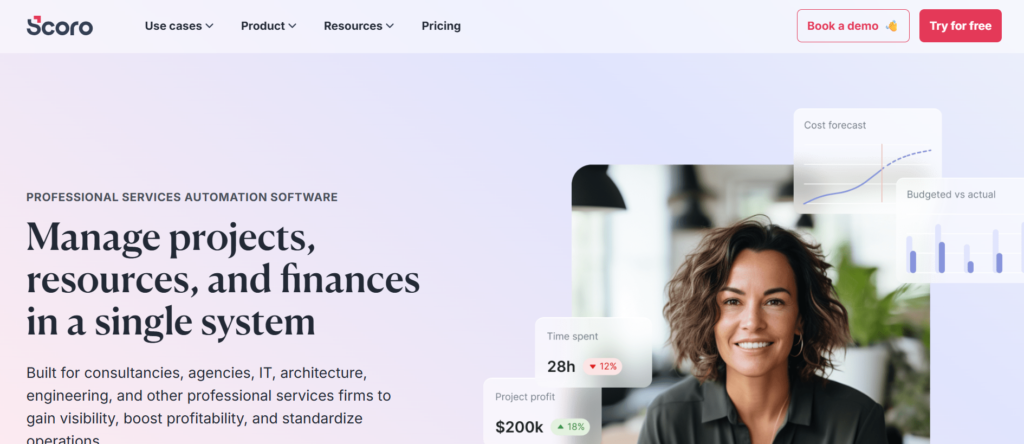
If you want more than project management and need full business visibility, this platform stands out.
Among the Best Project Portfolio Management Tools, it combines project management with billing, CRM, and reporting.
From most Scoro review insights, users highlight its ability to manage entire business operations in one system. Compared in Scoro vs Teamwork or Scoro alternatives, it offers deeper financial control.
Pricing starts at $26 per user/month.
Core Capabilities
Managing a portfolio is not just about projects. It is about profitability, client relationships, and operational efficiency.
This platform brings everything into one system, giving you full control over both execution and financial outcomes.
Project management
You can manage projects from start to finish.
This includes:
- Task tracking
- Timeline management
- Milestone monitoring
Financial tracking
You can track budgets and profitability.
CRM
Manage client relationships within the same platform.
Resource planning
Allocate resources efficiently across projects.
Reporting
Generate detailed performance and financial reports.
Pros and Cons
| Pros | Cons |
| All-in-one system | Expensive |
| Strong financial tracking | Complex setup |
| Good reporting | Learning curve |
| Business visibility | Not for small teams |
Pricing
- Essential: $26/month
- Standard: $37/month
- Pro: $63/month
Best Fit
- Agencies — Client + finance tracking
- Consultancies — Resource planning
- SMEs — Business visibility
- Service firms — Profit tracking
Verdict
For full business control, it is one of the Best Project Portfolio Management Tools.
Practical Tip
Use financial reports to identify your most profitable projects and focus future efforts there.
Best Alternate Tool
Teamwork is better if you want a simpler system focused on project delivery.
16. Celoxis
When you are managing multiple projects with tight deadlines, financial pressure, and resource constraints, visibility alone is not enough. You need control, forecasting, and risk awareness built into your system.
This platform is designed exactly for that level of management. Among the Best Project Portfolio Management Tools, it stands out for combining project tracking, financial management, and risk control in one place.
From most Celoxis review insights, organisations use it when spreadsheets and basic tools fail to handle increasing complexity. When comparing Celoxis vs Microsoft Project or reviewing Celoxis alternatives, the key advantage is that it combines planning, execution, and financial tracking without requiring multiple systems.
Pricing starts at $25 per user/month.
Core Capabilities
Managing a portfolio at scale requires more than tracking tasks. You need to understand risks, control budgets, and predict outcomes before they impact delivery.
This platform gives you a structured environment where every project is connected to financial performance, resource allocation, and risk indicators. It allows you to move from reactive management to controlled execution.
Project planning
Planning is detailed and structured to handle complex portfolios.
You can:
- Create project schedules with dependencies across multiple initiatives
- Define milestones and deadlines with clear timelines
- Adjust plans dynamically when priorities change
- Maintain visibility across all ongoing projects
This keeps your project tracking systems stay aligned even as complexity increases.
Resource management
Resource allocation is handled with precision and clarity.
You can:
- Assign resources based on skills and availability
- Monitor utilisation across multiple projects
- Identify overloaded team members before delays occur
- Reallocate work quickly to maintain balance
This level of control is critical when managing large teams across different functions.
Financial management
Financial tracking is deeply integrated into the system.
You can:
- Set budgets for individual projects and the overall portfolio
- Track actual costs against planned budgets
- Monitor profitability across projects
- Identify cost overruns early
This makes it easier to maintain financial discipline across your portfolio.
Risk management
Risk tracking is one of the strongest capabilities.
You can:
- Identify potential risks at project level
- Assign risk ownership to team members
- Track risk impact and probability
- Implement mitigation strategies before issues escalate
This reduces uncertainty and improves project outcomes.
Reporting
Reporting provides a clear overview of portfolio performance.
You can generate:
- Project health reports
- Resource utilisation summaries
- Financial performance dashboards
- Risk analysis reports
These insights support faster and more informed decisions.
Pros and Cons
| Pros | Cons |
| Strong financial tracking | Higher learning curve |
| Built-in risk management | Interface feels dense |
| Detailed reporting | Setup takes time |
| Enterprise-ready features | Not ideal for beginners |
Pricing
- Cloud: $25/month
- On-premise: Custom pricing
Best Fit
- Enterprises — Complex portfolios with financial tracking
- PMOs — Risk and resource management
- Consultancies — Multi-project environments
- Large teams — Structured execution
Verdict
If you need deep control over budgets, risks, and resources, this is one of the Best Project Portfolio Management Tools available.
Practical Tip
Use risk tracking alongside financial data to identify projects that are both high-cost and high-risk, then prioritise corrective action early.
Best Alternate Tool
Planview is a better option if your focus is more on strategic portfolio alignment rather than detailed execution control.
17. Mavenlink
When your projects are tied directly to revenue, billing, and resource utilisation, managing them with basic tools leads to missed profits and poor forecasting.
This platform is built specifically for service-based businesses that need visibility into both delivery and financial performance. Among the Best Project Portfolio Management Tools, it stands out for combining project execution with resource forecasting and revenue tracking.
From most Mavenlink review insights, consultancies and professional service firms rely on it to manage multiple client engagements while maintaining profitability. When comparing Mavenlink vs Teamwork or reviewing Mavenlink alternatives, the biggest advantage is its strong focus on financial forecasting alongside project tracking.
Pricing starts at $19 per user/month.
Core Capabilities
Managing a portfolio in a service environment is not just about deadlines. It is about utilisation rates, billable hours, and revenue outcomes.
This platform connects project execution with financial performance, giving you a system where every decision is tied to profitability and efficiency.
Resource forecasting
Resource planning is handled with a forward-looking approach.
You can:
- Forecast resource demand across upcoming projects
- Identify skill gaps before they impact delivery
- Plan hiring based on future workload
- Allocate resources based on project priority
This keeps your team always prepared for upcoming work instead of reacting at the last minute.
Project planning
Project structures are designed for clarity and control.
You can:
- Define timelines with clear milestones
- Assign responsibilities across teams
- Track progress in real time
- Adjust plans when client requirements change
This keeps your portfolio organised and predictable.
Financial tracking
Financial management is tightly integrated into project workflows.
You can:
- Track project budgets and actual spend
- Monitor revenue generated from each project
- Analyse profitability across your portfolio
- Identify projects that are underperforming financially
This gives you a clear understanding of where your business is making or losing money.
Time tracking
Time tracking is essential for service-based teams.
You can:
- Log billable and non-billable hours
- Measure productivity across teams
- Improve billing accuracy
- Identify inefficiencies in project execution
This directly impacts revenue and profitability.
Reporting
Reporting provides deep insights into both operations and finances.
You can generate:
- Resource utilisation reports
- Revenue and profitability analysis
- Project performance summaries
- Forecasting reports for future planning
This supports smarter decision-making across your entire portfolio.
Pros and Cons
| Pros | Cons |
| Strong financial focus | Expensive for small teams |
| Advanced forecasting | Complex setup |
| Good for services firms | Learning curve |
| Integrated time tracking | Not ideal for simple projects |
Pricing
- Starting at $19/month
- Enterprise: Custom pricing
Best Fit
- Consultancies — Revenue-focused projects
- Agencies — Multi-client portfolios
- Service firms — Billing and utilisation tracking
- PMOs — Financial visibility
Verdict
If your projects are tied directly to revenue and resource utilisation, this is one of the Best Project Portfolio Management Tools you can rely on.
Practical Tip
Use resource forecasting alongside data to predict future revenue and avoid underutilisation of your team.
Best Alternate Tool
Scoro is a strong alternative if you want a broader business management system alongside project tracking.
18. Clarizen
When organisations reach a point where workflows must be standardised, controlled, and aligned across departments, basic tools stop delivering results.
This platform is designed for that level of structure. Among the Best Project Portfolio Management Tools, it focuses on workflow governance, process control, and portfolio visibility at scale.
From most Clarizen review insights, enterprises rely on it to manage complex portfolios where multiple teams, approvals, and processes must stay aligned. When comparing Clarizen vs Planview or reviewing Clarizen alternatives, the key difference is its strong workflow engine combined with portfolio-level visibility.
Pricing is custom, typically suited for mid to large organisations.
Core Capabilities
Managing a portfolio at scale requires consistency in how work flows across teams. Without that, delays, miscommunication, and inefficiencies start to build up.
This platform provides a structured system where every project follows defined workflows, ensuring clarity, accountability, and control across the organisation.
Workflow management
Workflow control is at the centre of this platform.
You can:
- Define structured workflows for different project types
- Set approval stages for tasks and deliverables
- Keep consistency across departments
- Reduce delays caused by unclear processes
This creates a predictable system where work moves smoothly from one stage to the next.
Project visibility
You get full visibility across all projects in your portfolio.
This allows you to:
- Track progress across multiple teams
- Identify delays early
- Monitor dependencies between projects
- Maintain alignment across departments
This level of visibility is critical for managing complex portfolios.
Resource allocation
Resource management keeps balanced workloads.
You can:
- Assign resources based on capacity
- Track utilisation across projects
- Prevent overloading key team members
- Adjust allocations as priorities change
This improves efficiency and reduces burnout.
Collaboration
Teams collaborate within a structured environment.
You get:
- Centralised communication within tasks
- File sharing across projects
- Real-time updates on progress
This reduces reliance on external communication tools.
Reporting
Reporting provides insights into performance and workflows.
You can generate:
- Portfolio performance reports
- Workflow efficiency analysis
- Resource utilisation summaries
- Project health indicators
This supports better planning and continuous improvement.
Pros and Cons
| Pros | Cons |
| Strong workflow control | Expensive |
| Good for enterprises | Complex setup |
| Scalable system | Learning curve |
| Structured processes | Not for small teams |
Pricing
- Custom pricing based on organisation size and requirements
Best Fit
- Enterprises — Workflow governance
- PMOs — Process control
- Corporates — Multi-team coordination
- Large teams — Structured execution
Verdict
For organisations that need strict workflow control and consistency, this is one of the Best Project Portfolio Management Tools available.
Practical Tip
Standardise workflows across all departments so every project follows the same structure, reducing confusion and improving execution speed.
Best Alternate Tool
Planview is a strong alternative if your focus is more on strategic portfolio alignment.
19. Basecamp
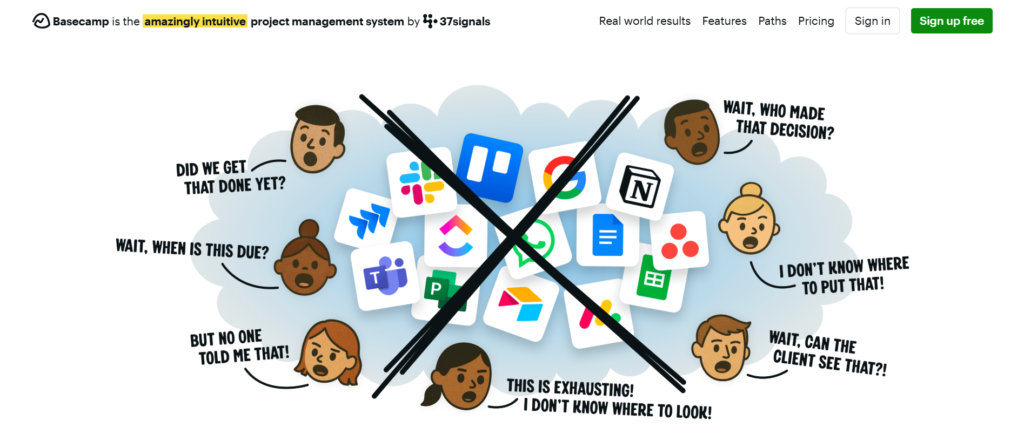
When teams get overwhelmed with too many features, too many dashboards, and too many systems, productivity starts to drop instead of improve.
This platform takes a completely different approach. Among the Best Project Portfolio Management Tools, it focuses on simplicity, clarity, and communication rather than complexity.
From most Basecamp review insights, teams adopt it when they want to reduce chaos and centralise communication. When comparing Basecamp vs Asana or reviewing Basecamp alternatives, the biggest difference is its simplicity and flat structure instead of layered complexity.
Pricing starts at $15 per user/month or a flat rate option for teams.
Core Capabilities
Managing a portfolio does not always require complex systems. In many cases, clarity and communication are more valuable than advanced features.
This platform provides a clean environment where teams can manage projects, communicate, and stay aligned without unnecessary complications. It is particularly effective when teams struggle with tool overload and fragmented communication.
Project organisation
Projects are structured in a simple and intuitive way.
You can:
- Create separate spaces for each project
- Organise tasks, discussions, and files within each space
- Maintain clarity without complex hierarchies
- Keep every team member understands where to find information
This simplicity reduces confusion and improves team adoption.
Task management
Task tracking is straightforward and easy to follow.
You can:
- Create to-do lists for each project
- Assign tasks to team members
- Set deadlines and priorities
- Track completion without complicated workflows
This makes it ideal for teams that want clarity over complexity.
Communication
Communication is centralised within the platform.
You get:
- Message boards for discussions
- Real-time group chats
- Comments within tasks
- Notifications to keep everyone updated
This reduces reliance on external tools like email or messaging apps.
File sharing
Files are stored and organised within projects.
You can:
- Upload documents and assets
- Share files with team members
- Keep everything related to a project in one place
- Avoid scattered file storage across tools
This improves accessibility and organisation.
Scheduling
Scheduling tools help teams stay on track.
You can:
- Set deadlines for tasks
- View project timelines
- Track upcoming milestones
- Keep projects stay aligned with timelines
Pros and Cons
| Pros | Cons |
| Very easy to use | Limited advanced features |
| Clean interface | Not suitable for complex portfolios |
| Strong communication tools | Basic reporting |
| Quick setup | Limited customisation |
Pricing
- Per user: $15/month
- Flat plan: $299/month (unlimited users)
Best Fit
- Small teams — Simple workflows
- Startups — Quick adoption
- Agencies — Client communication
- Remote teams — Centralised collaboration
Verdict
If your priority is simplicity and communication, this is one of the Best Project Portfolio Management Tools worth considering.
Practical Tip
Use message boards for structured discussions instead of relying on scattered communication channels. This keeps all decisions documented and easy to track.
Best Alternate Tool
Asana is a better option if you need more structured workflows with additional features.
20. Hive
When teams are working across departments, time zones, and multiple project streams, the biggest challenge is not just tracking work. It is keeping everything connected, responsive, and moving forward without delays.
This platform is built for that exact situation. Among the Best Project Portfolio Management Tools, it focuses on flexibility, automation, and team coordination in fast-moving environments.
From most Hive review insights, teams adopt it when they need a balance between structure and adaptability. When comparing Hive vs ClickUp or exploring Hive alternatives, the main advantage is its ability to combine automation, collaboration, and project tracking without overwhelming users.
Hive pricing starts at $12 per user/month.
Core Capabilities
Managing a portfolio across multiple teams requires a system that adapts quickly to changing priorities while maintaining control.
This platform provides a flexible environment where projects, communication, and workflows are connected. It allows teams to respond quickly without losing visibility across the entire portfolio.
Project views
Different teams work in different ways, and forcing one structure often creates friction.
You can switch between multiple project views such as:
- Kanban boards for workflow tracking
- Gantt charts for timeline planning
- Calendar views for scheduling
- Table views for structured data
This flexibility allows each team to work in the format that suits them while maintaining overall portfolio visibility.
Automation
Automation is built to reduce repetitive work and maintain consistency across projects.
You can:
- Create triggers for task updates based on progress
- Automatically assign tasks when conditions are met
- Send alerts when deadlines are approaching
- Maintain workflow consistency without manual intervention
This reduces operational friction and keeps your project tracking systems running smoothly.
Time tracking
Time tracking is integrated directly into workflows.
You can:
- Track time spent on tasks across projects
- Monitor productivity across teams
- Analyse how time impacts project delivery
- Improve estimation accuracy for future planning
This is particularly useful for teams managing billable work or tight deadlines.
Collaboration
Collaboration is centralised within the platform to reduce scattered communication.
You get:
- In-task messaging for direct communication
- File sharing within projects
- Real-time updates across teams
- Centralised discussions tied to specific tasks
This keeps that all communication stays connected to the work being done.
Analytics
Analytics provide insights into performance and efficiency across your portfolio.
You can track:
- Project progress across multiple teams
- Team productivity and workload distribution
- Bottlenecks affecting delivery timelines
- Overall portfolio performance
These insights allow better planning and continuous improvement.
Pros and Cons
| Pros | Cons |
| Flexible project views | Can feel complex initially |
| Strong automation | Requires setup time |
| Good collaboration tools | Pricing increases with features |
| Scalable for teams | Learning curve for advanced use |
Pricing
- Starter: $12/month
- Teams: $18/month
- Enterprise: Custom
Best Fit
- Hybrid teams — Multiple workflows
- Agencies — Fast-paced environments
- Startups — Flexible operations
- PMOs — Cross-team coordination
Verdict
For teams that need flexibility without losing control, this is one of the Best Project Portfolio Management Tools to consider.
Practical Tip
Use automation with multiple project views together. Set triggers that update tasks across views so every team stays aligned without manual updates.
Best Alternate Tool
ClickUp is a strong alternative if you want deeper customisation and more advanced configuration options.
Wrap-Up: Choosing the Right Project Portfolio Management System That Actually Works
By now, you have seen exactly how the Best Project Portfolio Management Tools compare across different use cases, budgets, and team structures.
Here is the truth most articles will not tell you:
There is no single “perfect” tool.
The right choice depends on:
- How complex your project portfolio is
- How many teams you manage
- Whether you prioritise simplicity or control
- How important financial tracking and resource planning are
If you are running a small team, tools like Trello or Asana will give you clarity quickly.
If you are managing multiple clients or service-based work, platforms like Teamwork or Mavenlink give better visibility into profitability.
If you are operating at enterprise level, tools like Planview, Celoxis, or Microsoft Project give deeper control over strategy, budgets, and resources.
The key is this:
Pick one system and implement it properly. Most teams fail not because of the tool, but because they never fully commit to using it.
If you are serious about improving execution, reducing delays, and gaining control over your portfolio, choosing from these Best Project Portfolio Management Tools is your next move.
Get Control of Your Project Portfolio With the Right System in Place
At Pearl Lemon Consulting, we work with businesses that are tired of missed deadlines, poor visibility, and disconnected systems.
We step in and:
- Audit your current project portfolio setup
- Identify gaps in workflows, reporting, and resource allocation
- Recommend the right project portfolio management software based on your business model
- Implement systems that align with your operational goals
- Train your team to actually use the tools effectively
Most teams already have tools. They just are not using them correctly.
We focus on fixing that.
If you are managing multiple projects and feel like things are slipping through the cracks, it is time to put structure in place and take control of your portfolio.
Service-Based FAQs
1. What is the main purpose of project portfolio management tools
They allow you to manage multiple projects in one system, giving visibility into timelines, budgets, and resources across your entire portfolio.
2. How do I choose the best project portfolio management tool
You should evaluate based on team size, project complexity, budget, and whether you need financial tracking or just task management.
3. Are free tools enough for project portfolio management
Free tools work for small teams, but as complexity increases, paid tools provide better control, reporting, and scalability.
4. What is the difference between project management and portfolio management
Project management focuses on individual projects, while portfolio management focuses on managing multiple projects together with strategic alignment.
5. Can these tools handle remote teams
Yes, most of the Best Project Portfolio Management Tools are built for remote and hybrid teams with collaboration and cloud-based access.
6. Do these tools include financial tracking
Some tools like Celoxis, Mavenlink, and Scoro include strong financial tracking, while others focus more on task management.
7. How long does it take to implement a project portfolio system
It depends on complexity, but most businesses take between 2 to 6 weeks to fully implement and adopt a system.
8. Are these tools suitable for agencies
Yes, tools like Teamwork, Scoro, and Hive are widely used by agencies managing multiple clients.
9. Can I switch tools later
Yes, but switching requires data migration and retraining, so it is better to choose carefully from the start.
10. What is the biggest mistake businesses make with these tools
The biggest mistake is not using the tool consistently across teams, which leads to incomplete data and poor decision-making.