
If your team is still stuck doing repetitive admin, copying data between systems, or manually processing invoices, you are bleeding time and money every single day.
That is exactly why RPA tools for SMEs in the UK have exploded in adoption over the last few years. According to Deloitte, businesses implementing robotic process automation can reduce operational costs by up to 30 percent. Meanwhile, McKinsey & Company reports that up to 60 percent of tasks in typical SME workflows can be automated.
We have tested and researched dozens of RPA tools for SMEs UK and narrowed them down to the top 20 platforms that actually deliver results.
This guide is for:
- SME owners in the UK
- Operations managers
- Finance and admin teams
- Agencies scaling processes
If you want to cut manual work, reduce errors, and scale without hiring, these RPA tools for SMEs UK are exactly what you need.
What is RPA (Robotic Process Automation)?
RPA, or robotic process automation, is software that mimics human actions to complete repetitive digital tasks.
Think of it like a virtual employee that:
- Logs into systems
- Copies and pastes data
- Processes invoices
- Sends emails
- Updates CRMs
The difference is it works 24/7 without errors.For UK SMEs, RPA tools for SMEs UK are critical because they:
- Reduce labour costs
- Improve accuracy
- Speed up operations
- Free up teams for higher-value work
Common use cases include:
- Invoice processing
- Payroll automation
- Customer onboarding
- Data migration
- Reporting
If your team is doing repetitive tasks, you need RPA tools for SMEs UK.
Quick Comparison Table for RPA Tools for SMEs UK
When choosing between RPA tools for SMEs in the UK, the most important factors are pricing, ease of use, automation capabilities, integrations, and scalability. These directly impact how quickly your SME can implement automation and see ROI.
| Tool | Best For | Starting Price | Free Trial | Key Feature | Ease of Use | Integrations |
| UiPath | Enterprise automation | £350/mo | Yes | AI automation | Medium | Extensive |
| Automation Anywhere | Cloud RPA | Custom | Yes | Bot marketplace | Medium | Extensive |
| Blue Prism | Secure RPA | Custom | No | Enterprise-grade | Hard | Moderate |
| Microsoft Power Automate | Microsoft users | £12/mo | Yes | Office integration | Easy | Strong |
| Zapier | No-code automation | £16/mo | Yes | App connections | Very easy | Huge |
| Make (Integromat) | Visual workflows | £9/mo | Yes | Scenario builder | Easy | Strong |
| WorkFusion | AI-driven RPA | Custom | No | Smart automation | Medium | Moderate |
| Pega | BPM + RPA | Custom | Yes | Process automation | Hard | Strong |
| Kofax | Document automation | Custom | Yes | OCR features | Medium | Moderate |
| Nintex | Workflow automation | £20/mo | Yes | Process mapping | Easy | Strong |
| Rocketbot | Affordable RPA | £10/mo | Yes | Low-cost bots | Easy | Moderate |
| Robocorp | Developer RPA | Free | Yes | Python-based | Medium | Flexible |
| ElectroNeek | SME-focused | £50/mo | Yes | Affordable RPA | Easy | Moderate |
| HelpSystems Automate | IT automation | Custom | Yes | Task automation | Medium | Strong |
| Kryon | Process discovery | Custom | Yes | Task mining | Medium | Moderate |
| EdgeVerve AssistEdge | Enterprise bots | Custom | No | Scalable RPA | Hard | Strong |
| SAP Intelligent RPA | SAP users | Custom | Yes | SAP integration | Medium | Strong |
| Appian RPA | Low-code RPA | Custom | Yes | App building | Medium | Strong |
| Parascript | Data extraction | Custom | No | AI OCR | Medium | Moderate |
| Ui.Vision RPA | Browser automation | Free | Yes | Web automation | Easy | Moderate |
UiPath – “Enterprise-Grade RPA Made Accessible”
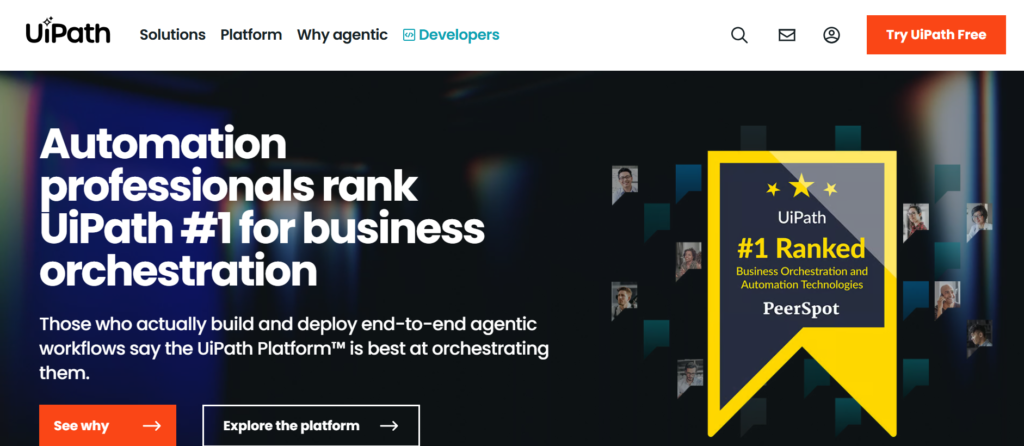
In the most detailed UiPath review insights, one thing stands out immediately. It is one of the most powerful and widely adopted platforms among all RPA tools for SMEs UK.
UiPath combines AI, automation, and ease of use into a single platform that works for both beginners and advanced teams. While it is known for enterprise use, many UK SMEs are now adopting UiPath to scale operations without increasing headcount.
Key Features
Drag-and-Drop Automation Builder
UiPath offers a visual workflow builder that allows users to create automation without heavy coding.
This makes it accessible for UK SMEs starting with automation. In most UiPath review breakdowns, this feature is praised for reducing the barrier to entry.
AI-Powered Automation
UiPath integrates artificial intelligence to handle complex tasks like document understanding and decision-making.
This allows UK businesses to automate more than just simple tasks. Compared in UiPath vs Automation Anywhere discussions, UiPath often leads in AI capabilities.
Attended and Unattended Bots
UiPath supports both attended bots (assist employees) and unattended bots (run independently).
This flexibility is critical for SMEs that want to automate both front-office and back-office processes.
Extensive Integrations
UiPath integrates with a wide range of tools including CRMs, ERPs, and cloud platforms.
This ensures UK teams can automate workflows across their entire tech stack. Many UiPath alternatives offer fewer integrations.
Process Mining and Analytics
UiPath includes tools to analyse workflows and identify automation opportunities.
This helps UK SMEs optimise operations before and after automation implementation.
Pros & Cons
| Pros | Cons |
| Powerful automation | Can be expensive |
| AI capabilities | Learning curve |
| Scalable platform | Setup time required |
| Strong community | Overkill for small tasks |
Pricing
UiPath offers a free community edition for individuals and small teams.
Paid plans typically start from around £350 per month depending on:
- Number of bots
- Features required
- Deployment type
Best For UK SMEs Scaling Automation Across Departments
UiPath is ideal for businesses that want to go beyond basic automation.
- SMEs — scale operations efficiently
- Finance teams — automate invoicing
- Operations teams — streamline workflows
- Enterprises — manage complex automation
Verdict:
If you want a robust and scalable solution among all RPA tools for SMEs in the UK, UiPath is a top choice. Start with the free version to test workflows before scaling.
How to Use UiPath for UK Business Automation
A practical setup for UK SMEs:
- Identify repetitive processes
- Build workflows using drag-and-drop tools
- Deploy bots for automation
- Monitor performance with analytics
This ensures a smooth transition into automation.
Quick tip: Use UiPath’s process mining feature to uncover hidden inefficiencies before building automation workflows.
Best Alternate Tool
If you are comparing UiPath alternatives, Automation Anywhere is a strong option.
In UiPath vs Automation Anywhere comparisons, UiPath is often easier to start with, while Automation Anywhere offers strong cloud-native automation.
Automation Anywhere – “Cloud-Native RPA Built for Scale”
In most detailed Automation Anywhere review insights, one thing becomes clear fast. It is built for businesses that want cloud-first automation without heavy infrastructure.
Among all RPA tools for SMEs UK, Automation Anywhere stands out for its scalable, cloud-native platform that allows UK businesses to deploy bots quickly and manage them centrally.
It is widely used by SMEs and enterprises across the UK that want flexibility and speed in automation.
Key Features
Cloud-Native Automation Platform
Automation Anywhere is built for the cloud, meaning no complex installations are required.
UK SMEs can deploy automation faster and manage everything from a central dashboard. In most Automation Anywhere review discussions, this is seen as a major advantage over traditional RPA tools.
Bot Creator and Bot Runner
The platform allows you to create bots and deploy them easily across workflows.
This flexibility helps UK teams automate both simple and complex processes. Compared in Automation Anywhere vs UiPath comparisons, it is often preferred for cloud deployment.
AI and Cognitive Automation
Automation Anywhere includes AI features for handling unstructured data and decision-making.
This allows UK businesses to automate processes like document processing and customer interactions more effectively.
Bot Marketplace
Automation Anywhere provides a marketplace with pre-built bots.
This helps SMEs in the UK get started quickly without building automation from scratch. Many Automation Anywhere alternatives do not offer this level of ready-to-use automation.
Strong Security and Compliance
The platform includes enterprise-grade security features.
This is essential for UK businesses handling sensitive data and regulatory requirements.
Pros & Cons
| Pros | Cons |
| Cloud-based platform | Pricing not transparent |
| Scalable automation | Learning curve |
| AI capabilities | Setup required |
| Bot marketplace | Can be costly |
Pricing
Automation Anywhere offers a free trial.
Paid plans are custom-priced based on:
- Number of bots
- Features required
- Deployment scale
Best For UK SMEs Wanting Cloud-Based Automation
Automation Anywhere is ideal for businesses that prefer cloud-first solutions.
- SMEs — scale automation quickly
- Operations teams — streamline workflows
- Finance teams — automate processes
- Enterprises — manage large automation
Verdict:
If you want a cloud-native platform among all RPA tools for SMEs UK, Automation Anywhere is a strong choice. A useful tip is to start with pre-built bots from the marketplace to save time.
How to Use Automation Anywhere for UK Business Workflows
A practical setup for UK SMEs:
- Identify repetitive tasks
- Use Bot Creator to build workflows
- Deploy bots via cloud platform
- Monitor performance centrally
This ensures efficient and scalable automation.
Quick tip: Use the bot marketplace to quickly deploy automation for common tasks like invoice processing or data entry.
Best Alternate Tool
If you are comparing Automation Anywhere alternatives, UiPath is a strong option.
In Automation Anywhere vs UiPath comparisons, Automation Anywhere is more cloud-focused, while UiPath offers more flexibility for hybrid environments.
Blue Prism – “Enterprise-Grade RPA with Strong Governance”
In most detailed Blue Prism review discussions, one thing stands out immediately. It is built for organisations that need strict control, governance, and security in their automation.
Among all RPA tools for SMEs in the UK, Blue Prism is known for its enterprise-grade capabilities. While it is traditionally used by large organisations, many UK SMEs with compliance requirements are now adopting it.
Key Features
Centralised Control and Governance
Blue Prism offers a centralised platform to manage all automation processes.
This ensures full visibility and control over bots. In most Blue Prism review insights, this is highlighted as a key advantage for regulated industries in the UK.
Scalable Digital Workforce
Blue Prism allows businesses to deploy a scalable digital workforce.
This means UK SMEs can automate processes across departments without increasing headcount. Compared in Blue Prism vs UiPath discussions, Blue Prism is often preferred for structured environments.
Strong Security and Compliance
Blue Prism is designed with security at its core.
It includes role-based access, audit trails, and compliance features. This makes it ideal for UK businesses in finance, healthcare, and legal sectors.
No-Code Automation Approach
Blue Prism uses a visual interface that reduces the need for coding.
This allows business users to build automation workflows, although some technical understanding is still required.
Integration with Enterprise Systems
Blue Prism integrates with ERP systems, CRMs, and other enterprise tools.
This enables UK teams to automate workflows across multiple platforms efficiently.
Pros & Cons
| Pros | Cons |
| Strong security | High cost |
| Scalable automation | Steep learning curve |
| Enterprise-grade | Not SME-friendly |
| Good governance | Setup complex |
Pricing
Blue Prism does not offer public pricing.
Costs are typically enterprise-level and depend on:
- Number of bots
- Deployment scale
- Support requirements
Best For UK SMEs with Compliance and Security Needs
Blue Prism is ideal for businesses that prioritise control and compliance.
- Finance teams — manage secure workflows
- Legal firms — handle sensitive data
- Healthcare organisations — ensure compliance
- Enterprises — scale automation securely
Verdict:
If your business operates in a regulated environment, Blue Prism is a strong choice among RPA tools for SMEs UK. Start small and scale gradually to manage complexity.
How to Use Blue Prism for UK Business Automation
A practical setup for UK SMEs:
- Identify compliance-heavy processes
- Build workflows using visual tools
- Deploy bots centrally
- Monitor with audit trails
This ensures secure and structured automation.
Quick tip: Focus on high-risk, repetitive processes first to maximise ROI while maintaining compliance.
Best Alternate Tool
If you are comparing Blue Prism alternatives, UiPath is a strong option.
In Blue Prism vs UiPath comparisons, Blue Prism is stronger in governance, while UiPath is easier to use.
Microsoft Power Automate – “Seamless Automation for Microsoft Ecosystems”
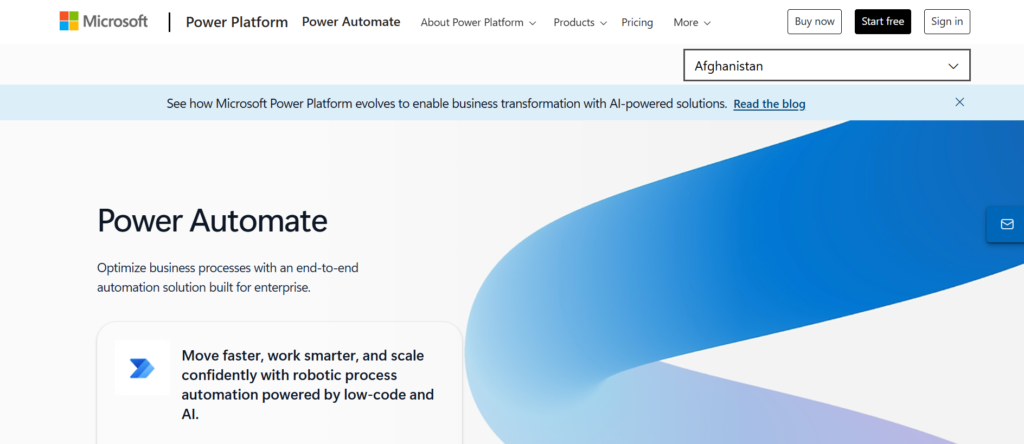
In most detailed Microsoft Power Automate review insights, one thing becomes obvious. It is one of the most accessible and widely adopted platforms among all RPA tools for SMEs UK, especially for businesses already using Microsoft 365.
For UK SMEs, this tool offers a powerful mix of RPA, workflow automation, and integrations without the steep learning curve seen in more complex platforms.
Key Features
Low-Code Workflow Automation
Microsoft Power Automate allows users to build workflows using a simple drag-and-drop interface.
This makes it easy for non-technical UK teams to automate repetitive tasks. In most Microsoft Power Automate review breakdowns, this ease of use is a major selling point.
Deep Microsoft 365 Integration
Power Automate integrates seamlessly with tools like Outlook, Excel, Teams, and SharePoint.
This allows UK businesses to automate workflows directly within their existing systems. Compared in Microsoft Power Automate vs Zapier discussions, it is often preferred for Microsoft-heavy environments.
Robotic Process Automation (RPA)
The platform includes both attended and unattended RPA capabilities.
This means UK SMEs can automate legacy systems and desktop-based tasks without APIs, making it highly versatile.
Pre-Built Templates
Power Automate offers hundreds of ready-made templates.
These help UK teams get started quickly with common automations like email alerts, approvals, and data syncing. Many Microsoft Power Automate alternatives lack this depth of templates.
AI Builder Capabilities
Microsoft includes AI tools for form processing, prediction, and object detection.
This allows UK businesses to automate more complex workflows involving data and decision-making.
Pros & Cons
| Pros | Cons |
| Easy to use | Limited outside Microsoft |
| Strong integrations | Can get complex at scale |
| Affordable pricing | Performance limits |
| Good templates | UI can feel cluttered |
Pricing
Microsoft Power Automate offers a free plan with limited features.
Paid plans start at around £12 per user per month and include:
- RPA capabilities
- Premium connectors
- Advanced automation
Best For UK SMEs Using Microsoft Tools
Microsoft Power Automate is ideal for businesses already using Microsoft 365.
- SMEs — automate daily workflows
- Finance teams — streamline approvals
- HR teams — automate onboarding
- Operations teams — connect systems
Verdict:
If your business runs on Microsoft tools, this is one of the most practical RPA tools for SMEs in the UK. Start with templates to quickly automate common processes.
How to Use Microsoft Power Automate for UK Business Workflows
A practical setup for UK SMEs:
- Identify repetitive tasks
- Choose a template or build a workflow
- Connect Microsoft apps
- Automate approvals and notifications
This ensures quick wins with minimal setup.
Quick tip: Use approval workflows in Teams and Outlook to automate internal processes without manual follow-ups.
Best Alternate Tool
If you are comparing Microsoft Power Automate alternatives, Zapier is a strong option.
In Microsoft Power Automate vs Zapier comparisons, Power Automate is better for Microsoft ecosystems, while Zapier offers broader app integrations.
Zapier – “No-Code Automation for Everyday Business Tasks”
In most detailed Zapier review insights, one thing stands out instantly. It is one of the easiest platforms to start with among all RPA tools for SMEs in the UK.
Zapier is designed for non-technical users who want to automate workflows without coding. For UK SMEs, this means you can connect apps, automate tasks, and streamline operations in minutes.
It is widely used by startups, agencies, and small businesses across the UK.
Key Features
No-Code Automation Builder
Zapier allows users to create “Zaps” using a simple trigger-and-action system.
This makes automation accessible to anyone. In most Zapier review breakdowns, this ease of use is its biggest advantage.
Massive App Integrations
Zapier connects with over 5,000 apps including CRMs, email platforms, and accounting tools.
This allows UK SMEs to automate workflows across their entire tech stack. Compared in Zapier vs Make discussions, Zapier is often preferred for its integration library.
Multi-Step Workflows
Zapier allows you to create workflows with multiple steps.
This means you can automate complex processes like lead management or invoicing. Many Zapier alternatives limit workflow complexity.
Pre-Built Automation Templates
Zapier provides ready-made templates for common use cases.
This helps UK teams get started quickly without building automation from scratch.
Filters and Conditional Logic
Zapier includes logic-based conditions to control workflows.
This allows UK businesses to automate smarter, not just faster.
Pros & Cons
| Pros | Cons |
| Very easy to use | Can get expensive |
| Huge integrations | Limited RPA depth |
| No coding needed | Task limits |
| Quick setup | Not for complex automation |
Pricing
Zapier offers a free plan with limited tasks.
Paid plans start at around £16 per month and scale based on:
- Number of tasks
- Workflow complexity
- Premium integrations
Best For UK SMEs Starting with Automation
Zapier is ideal for businesses that want quick wins without technical setup.
- SMEs — automate daily tasks
- Agencies — manage client workflows
- Marketing teams — automate campaigns
- Sales teams — streamline leads
Verdict:
If you are new to automation, Zapier is one of the easiest RPA tools for SMEs in the UK to start with. Begin with simple workflows and scale as needed.
How to Use Zapier for UK Business Workflows
A practical setup for UK SMEs:
- Connect your apps
- Create a trigger (e.g. new lead)
- Add actions (e.g. send email, update CRM)
- Automate repetitive tasks
This delivers immediate time savings.
Quick tip: Start with high-frequency tasks like lead notifications or invoice creation to see quick ROI.
Best Alternate Tool
If you are comparing Zapier alternatives, Make (Integromat) is a strong option.
In Zapier vs Make comparisons, Zapier is easier to use, while Make offers more advanced workflow control.
Make (Integromat) – “Advanced Visual Automation Without Coding”
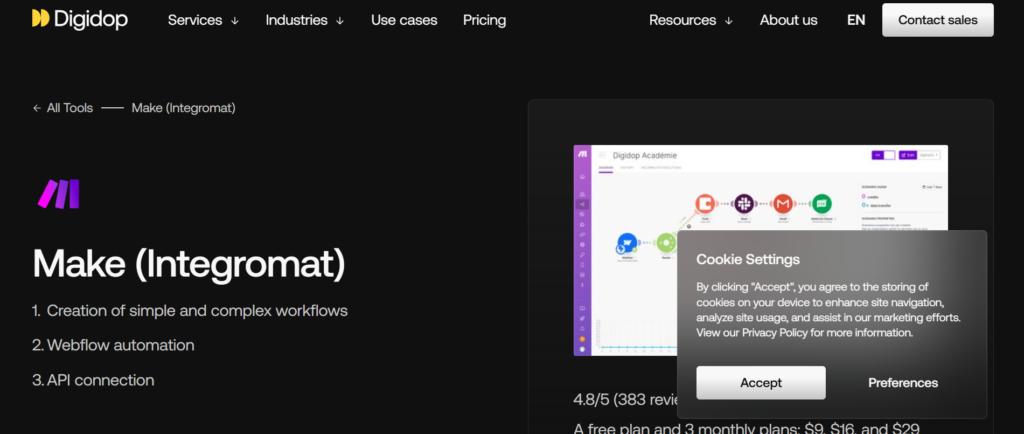
In most detailed Make review insights, one thing becomes clear straight away. It offers far more control and flexibility than most no-code tools among all RPA tools for SMEs in the UK.
Formerly known as Integromat, Make is designed for users who want powerful automation with a visual builder. For UK SMEs, it strikes a balance between simplicity and advanced functionality.
Key Features
Visual Workflow Builder
Make uses a visual scenario builder where you can map out automation step by step.
This allows UK teams to see exactly how workflows operate. In most Make review breakdowns, this feature is praised for clarity and control compared to simpler tools.
Advanced Logic and Conditions
Make allows complex branching, filters, and conditional logic.
This makes it possible to automate more advanced processes than many Make alternatives. Compared in Make vs Zapier discussions, Make is often preferred for flexibility.
Extensive App Integrations
Make integrates with hundreds of apps including CRMs, marketing tools, and databases.
This allows UK SMEs to connect systems and automate workflows across platforms.
Real-Time Data Processing
Make processes data in real time, allowing instant automation.
This is useful for UK businesses handling time-sensitive workflows like lead management or order processing.
Cost-Effective Automation
Make offers more operations at a lower cost compared to many competitors.
This makes it one of the more affordable RPA tools for SMEs UK at scale.
Pros & Cons
| Pros | Cons |
| Visual workflows | Slight learning curve |
| Advanced logic | Interface can feel complex |
| Affordable pricing | Not beginner-friendly |
| Flexible automation | Setup takes time |
Pricing
Make offers a free plan with limited operations.
Paid plans start at around £9 per month and scale based on:
- Number of operations
- Workflow complexity
- Data usage
Best For UK SMEs Wanting Advanced Automation Without Coding
Make is ideal for businesses that need more control than basic tools provide.
- SMEs — automate complex workflows
- Agencies — manage multiple clients
- Marketing teams — automate campaigns
- Operations teams — streamline systems
Verdict:
If Zapier feels too limited, Make is one of the most powerful RPA tools for SMEs UK without requiring coding. Start small and gradually build more complex workflows.
How to Use Make for UK Business Workflows
A practical setup for UK SMEs:
- Create a visual workflow (scenario)
- Connect apps and data sources
- Add filters and conditions
- Automate multi-step processes
This gives you full control over automation.
Quick tip: Use routers in Make to create multiple workflow paths based on conditions for smarter automation.
Best Alternate Tool
If you are comparing Make alternatives, Zapier is a strong option.
In Make vs Zapier comparisons, Make offers more control, while Zapier is easier to use.
WorkFusion – “AI-Powered RPA for Data-Heavy Workflows”
In most detailed WorkFusion review insights, one thing stands out immediately. It goes beyond basic automation and focuses heavily on AI-driven processes.
Among all RPA tools for SMEs UK, WorkFusion is designed for businesses dealing with large volumes of data, documents, and repetitive decision-based workflows. It is especially popular in finance, compliance, and operations-heavy industries across the UK.
Key Features
AI-Driven Automation
WorkFusion combines RPA with artificial intelligence to automate complex tasks.
This includes handling unstructured data and making decisions based on patterns. In most WorkFusion review breakdowns, this is its biggest differentiator.
Pre-Trained Digital Workers
WorkFusion provides ready-made bots trained for specific industries.
This allows UK SMEs to deploy automation quickly without building everything from scratch. Many WorkFusion alternatives lack this level of pre-built intelligence.
Document Processing and OCR
WorkFusion includes advanced document processing with OCR capabilities.
This makes it ideal for UK businesses handling invoices, contracts, and compliance documents at scale.
Workflow Automation and Orchestration
The platform allows you to design and manage end-to-end workflows.
This ensures automation runs smoothly across multiple systems and processes.
Analytics and Performance Tracking
WorkFusion provides insights into automation performance.
This helps UK teams optimise workflows and improve efficiency over time.
Pros & Cons
| Pros | Cons |
| Strong AI capabilities | Expensive |
| Pre-trained bots | Complex setup |
| Great for data workflows | Not beginner-friendly |
| Advanced automation | Limited transparency |
Pricing
WorkFusion pricing is custom and typically aimed at mid-sized to enterprise businesses.
Costs depend on:
- Use case
- Number of bots
- AI features required
Best For UK SMEs Handling High-Volume Data Processes
WorkFusion is ideal for businesses that deal with complex, data-heavy workflows.
- Finance teams — process invoices
- Compliance teams — handle regulations
- Operations teams — manage data workflows
- Enterprises — automate complex tasks
Verdict:
If your business relies heavily on document processing and data handling, WorkFusion is one of the most advanced RPA tools for SMEs in the UK. Focus on high-volume processes to justify the investment.
How to Use WorkFusion for UK Business Workflows
A practical setup for UK SMEs:
- Identify data-heavy processes
- Deploy pre-trained bots
- Automate document workflows
- Monitor performance with analytics
This ensures efficient and scalable automation.
Quick tip: Start with invoice or document processing workflows to maximise ROI quickly.
Best Alternate Tool
If you are comparing WorkFusion alternatives, UiPath is a strong option.
In WorkFusion vs UiPath comparisons, WorkFusion excels in AI-driven automation, while UiPath offers broader flexibility.
Pega – “End-to-End Process Automation with RPA”
In most detailed Pega review insights, one thing stands out straight away. It combines RPA with full business process management, making it far more than just a bot tool.
Among all RPA tools for SMEs UK, Pega is built for organisations that want to automate entire workflows, not just individual tasks. It is widely used by UK enterprises and growing SMEs with complex operations.
Key Features
Unified RPA and BPM Platform
Pega combines robotic process automation with business process management.
This allows UK businesses to automate complete workflows from start to finish. In most Pega review breakdowns, this is its biggest strength compared to standalone RPA tools.
Low-Code Automation Builder
Pega offers a low-code environment for building automation workflows.
This enables UK teams to design processes without heavy coding. Compared in Pega vs UiPath discussions, Pega is often preferred for end-to-end automation.
AI-Driven Decisioning
Pega includes AI capabilities for decision-making within workflows.
This allows businesses to automate processes that require logic and judgement, not just repetition.
Customer Journey Automation
Pega can automate customer-facing processes such as onboarding and support.
This makes it useful for UK businesses looking to improve customer experience while reducing manual work.
Scalable Enterprise Architecture
Pega is designed to scale across departments and large organisations.
This ensures UK SMEs can grow their automation capabilities over time.
Pros & Cons
| Pros | Cons |
| End-to-end automation | Expensive |
| AI capabilities | Complex setup |
| Scalable platform | Steep learning curve |
| Low-code builder | Overkill for small teams |
Pricing
Pega pricing is custom and typically suited for mid-sized to enterprise organisations.
Costs depend on:
- Deployment size
- Features required
- Number of users and bots
Best For UK SMEs Needing Full Process Automation
Pega is ideal for businesses that want to automate complete workflows.
- Enterprises — manage complex processes
- SMEs — scale operations
- Customer service teams — automate journeys
- Operations teams — streamline workflows
Verdict:
If you are looking for full-scale automation rather than simple task automation, Pega is one of the most powerful RPA tools for SMEs in the UK. Focus on high-impact workflows to maximise ROI.
How to Use Pega for UK Business Workflows
A practical setup for UK SMEs:
- Map out end-to-end processes
- Build workflows using low-code tools
- Integrate systems and data
- Automate decision-making
This ensures complete process automation.
Quick tip: Start with customer-facing workflows like onboarding to see immediate improvements in efficiency and experience.
Best Alternate Tool
If you are comparing Pega alternatives, Appian RPA is a strong option.
In Pega vs Appian comparisons, Pega offers deeper AI capabilities, while Appian is often easier to deploy.
Appian RPA – “Low-Code Automation Meets Process Management”
In the most detailed Appian RPA review insights, one thing becomes obvious straight away. It is designed to combine RPA with powerful low-code application development.
Among all RPA tools for SMEs UK, Appian stands out for businesses that want to build automation alongside custom business applications. It is widely used across the UK by organisations looking for flexibility and scalability.
Key Features
Low-Code Automation Platform
Appian allows users to build automation workflows with minimal coding.
This makes it easier for UK SMEs to design and deploy automation without heavy technical resources. In most Appian RPA review breakdowns, this is a major advantage.
Seamless RPA and BPM Integration
Appian combines robotic process automation with business process management.
This allows UK businesses to automate entire workflows rather than isolated tasks. Compared in Appian vs Pega discussions, Appian is often seen as more user-friendly.
Drag-and-Drop Workflow Design
The platform includes a visual interface for building workflows.
This helps UK teams quickly create and modify automation processes without complexity.
Strong Data Integration
Appian connects with databases, APIs, and enterprise systems.
This ensures UK businesses can automate workflows across multiple platforms efficiently.
Real-Time Monitoring and Analytics
Appian provides dashboards to track automation performance.
This allows UK SMEs to optimise workflows and improve efficiency over time.
Pros & Cons
| Pros | Cons |
| Low-code platform | Expensive |
| Strong integrations | Learning curve |
| End-to-end automation | Setup time |
| Scalable solution | Not beginner-friendly |
Pricing
Appian pricing is custom and typically suited for mid-sized to enterprise organisations.
Costs depend on:
- Number of users
- Automation scale
- Features required
Best For UK SMEs Building Custom Automation Workflows
Appian RPA is ideal for businesses that want flexibility and control.
- SMEs — build custom workflows
- Enterprises — scale automation
- Operations teams — streamline processes
- IT teams — manage integrations
Verdict:
If you want a mix of low-code development and automation, Appian is one of the most versatile RPA tools for SMEs in the UK. Start with core workflows and expand gradually.
How to Use Appian RPA for UK Business Workflows
A practical setup for UK SMEs:
- Design workflows using drag-and-drop tools
- Integrate systems and data
- Deploy automation across processes
- Monitor performance in real time
This ensures efficient and scalable automation.
Quick tip: Use Appian’s low-code capabilities to build custom apps that work alongside your automation workflows.
Best Alternate Tool
If you are comparing Appian alternatives, Pega is a strong option.
In Appian vs Pega comparisons, Appian is easier to use, while Pega offers deeper enterprise capabilities.
Kryon – “Full-Cycle Automation with Process Discovery”
In the most detailed Kryon review insights, one thing becomes clear immediately. It is not just an RPA tool. It focuses heavily on discovering what to automate before building bots.
Among all RPA tools for SMEs UK, Kryon is ideal for businesses that are unsure where to start with automation. It is widely used by UK companies that want data-driven automation decisions.
Key Features
Process Discovery Technology
Kryon automatically identifies repetitive processes within your business.
This helps UK SMEs uncover automation opportunities they may not even be aware of. In most Kryon review breakdowns, this is highlighted as a unique advantage.
Full-Cycle Automation Suite
Kryon offers tools for discovery, development, and deployment.
This means UK businesses can manage the entire automation lifecycle in one platform. Compared in Kryon vs UiPath discussions, Kryon stands out for its discovery capabilities.
No-Code Automation Builder
The platform includes a no-code interface for building bots.
This allows UK teams to create automation workflows without technical expertise.
Attended and Unattended Bots
Kryon supports both attended and unattended automation.
This gives UK SMEs flexibility in how they deploy bots across workflows.
Analytics and Optimisation Tools
Kryon provides insights into automation performance.
This allows businesses to refine workflows and improve efficiency over time.
Pros & Cons
| Pros | Cons |
| Strong process discovery | Expensive |
| Full lifecycle platform | Learning curve |
| No-code builder | Setup required |
| Scalable automation | Less popular |
Pricing
Kryon pricing is custom and based on:
- Number of bots
- Features required
- Deployment scale
A free trial may be available.
Best For UK SMEs New to Automation
Kryon is ideal for businesses that do not know where to start.
- SMEs — identify automation opportunities
- Operations teams — improve workflows
- Finance teams — streamline processes
- Enterprises — scale automation
Verdict:
If you are unsure what to automate, Kryon is one of the smartest RPA tools for SMEs UK to begin with. Use its discovery tools first to maximise ROI.
How to Use Kryon for UK Business Workflows
A practical setup for UK SMEs:
- Use process discovery tools
- Identify repetitive tasks
- Build bots using no-code tools
- Monitor and optimise workflows
This ensures automation is data-driven.
Quick tip: Start with process discovery before building any bots to avoid automating inefficient workflows.
Best Alternate Tool
If you are comparing Kryon alternatives, Automation Anywhere is a strong option.
In Kryon vs Automation Anywhere comparisons, Kryon excels in discovery, while Automation Anywhere is stronger in cloud deployment.
NICE Robotic Automation – “Scalable RPA for Customer-Centric Operations”
In most detailed NICE Robotic Automation review insights, one thing stands out straight away. It is built with a strong focus on customer service and front-office automation.
Among all RPA tools for SMEs UK, NICE is particularly well-suited for businesses that want to improve customer interactions while automating back-office tasks. It is widely used across the UK in contact centres and service-driven industries.
Key Features
Attended Automation for Frontline Teams
NICE specialises in attended automation, helping employees work more efficiently.
This allows UK customer service teams to automate repetitive tasks during live interactions. In most NICE Robotic Automation review discussions, this is a key advantage.
Real-Time Guidance and Automation
The platform provides real-time prompts and automation suggestions.
This helps UK teams improve accuracy and speed during customer interactions, reducing errors and improving service quality.
Advanced Analytics and Insights
NICE includes analytics tools to track performance and identify optimisation opportunities.
This helps UK SMEs improve both automation workflows and customer experience.
Integration with CRM and Contact Centre Tools
NICE integrates with major CRM systems and contact centre platforms.
This allows UK businesses to automate workflows across customer-facing systems seamlessly.
Scalable Automation Framework
NICE supports scaling automation across departments.
This makes it suitable for growing UK SMEs that want to expand their automation over time.
Pros & Cons
| Pros | Cons |
| Strong for customer service | Expensive |
| Real-time automation | Complex setup |
| Good analytics | Learning curve |
| Scalable solution | Niche focus |
Pricing
NICE Robotic Automation pricing is custom.
Costs depend on:
- Number of users
- Automation scale
- Features required
Best For UK SMEs Focused on Customer Experience
NICE is ideal for businesses that prioritise customer interactions.
- Customer service teams — automate tasks
- Contact centres — improve efficiency
- SMEs — enhance customer experience
- Enterprises — scale service automation
Verdict:
If your business relies heavily on customer service, NICE is one of the most effective RPA tools for SMEs in the UK. Focus on frontline automation to see immediate improvements.
How to Use NICE for UK Business Workflows
A practical setup for UK SMEs:
- Identify repetitive customer service tasks
- Deploy attended automation
- Integrate with CRM systems
- Monitor performance and optimise
This ensures improved efficiency and service quality.
Quick tip: Use real-time guidance features to assist agents during live customer interactions for better outcomes.
Best Alternate Tool
If you are comparing NICE alternatives, Pega is a strong option.
In NICE vs Pega comparisons, NICE excels in customer service automation, while Pega offers broader process automation.
HelpSystems Automate – “Flexible RPA for IT and Business Teams”
In most detailed HelpSystems Automate review insights, one thing becomes clear straight away. It is built to serve both IT professionals and business users with flexible automation options.
Among all RPA tools for SMEs UK, HelpSystems Automate stands out for its balance between technical depth and usability. It is widely used by UK businesses that want both desktop and enterprise-level automation.
Key Features
Powerful Task Automation Engine
HelpSystems Automate allows users to automate a wide range of repetitive tasks.
This includes file transfers, data processing, and system operations. In most HelpSystems Automate review breakdowns, this is seen as a core strength.
Low-Code and Script-Based Automation
The platform supports both low-code workflows and advanced scripting.
This gives UK SMEs flexibility depending on their technical expertise. Compared in HelpSystems Automate vs UiPath discussions, it is often preferred for hybrid use cases.
Event-Based Automation
HelpSystems Automate can trigger workflows based on specific events.
This allows UK businesses to automate processes in real time, improving efficiency and responsiveness.
Secure File Transfer Integration
The platform integrates with managed file transfer solutions.
This makes it ideal for UK organisations handling sensitive data and compliance requirements.
Centralised Management Console
HelpSystems Automate provides a central dashboard for monitoring and managing automation.
This ensures UK teams have full visibility and control over workflows.
Pros & Cons
| Pros | Cons |
| Flexible automation | Interface feels dated |
| Strong IT features | Learning curve |
| Event-based triggers | Less popular |
| Secure integrations | Setup required |
Pricing
HelpSystems Automate pricing is custom.
Costs depend on:
- Deployment size
- Features required
- Automation complexity
Best For UK SMEs Needing IT-Level Automation Control
HelpSystems Automate is ideal for businesses that need deeper technical control.
- IT teams — automate system tasks
- SMEs — manage workflows
- Finance teams — process data
- Enterprises — scale automation
Verdict:
If you need both technical flexibility and business automation, this is one of the most versatile RPA tools for SMEs in the UK. Combine low-code and scripting for best results.
How to Use HelpSystems Automate for UK Business Workflows
A practical setup for UK SMEs:
- Identify IT and business processes
- Create workflows using low-code or scripts
- Set event-based triggers
- Monitor automation centrally
This ensures efficient and controlled automation.
Quick tip: Use event-based triggers to automate processes like file transfers or system updates without manual intervention.
Best Alternate Tool
If you are comparing HelpSystems Automate alternatives, Automation Anywhere is a strong option.
In HelpSystems Automate vs Automation Anywhere comparisons, HelpSystems offers more technical control, while Automation Anywhere is more cloud-focused.
EdgeVerve AssistEdge – “AI-Driven RPA with Enterprise Intelligence”
In most detailed AssistEdge review insights, one thing stands out immediately. It combines robotic process automation with AI and analytics to deliver smarter automation.
Among all RPA tools for SMEs UK, EdgeVerve AssistEdge is designed for businesses that want intelligent automation rather than just task execution. It is widely adopted by UK enterprises and scaling SMEs.
Key Features
Intelligent Automation with AI
AssistEdge uses artificial intelligence to enhance automation workflows.
This allows UK businesses to automate decision-based processes, not just repetitive tasks. In most AssistEdge review breakdowns, this is a key differentiator.
End-to-End Process Automation
The platform supports complete workflow automation across departments.
This ensures UK SMEs can streamline operations from start to finish. Compared in AssistEdge vs UiPath discussions, it is often noted for its enterprise-grade capabilities.
Process Discovery and Optimisation
AssistEdge includes tools to identify automation opportunities.
This helps UK businesses focus on high-impact processes and maximise ROI.
Integration with Enterprise Systems
The platform integrates with ERP systems, CRMs, and legacy applications.
This allows UK teams to automate workflows across multiple systems efficiently.
Advanced Analytics Dashboard
AssistEdge provides insights into automation performance.
This helps UK SMEs optimise workflows and improve productivity over time.
Pros & Cons
| Pros | Cons |
| AI-powered automation | Expensive |
| Strong analytics | Complex setup |
| End-to-end workflows | Learning curve |
| Scalable platform | Enterprise focus |
Pricing
AssistEdge pricing is custom.
Costs depend on:
- Number of bots
- Features required
- Deployment scale
Best For UK SMEs Seeking Intelligent Automation
AssistEdge is ideal for businesses that want advanced automation capabilities.
- SMEs — automate complex workflows
- Enterprises — scale automation
- Operations teams — improve efficiency
- IT teams — manage integrations
Verdict:
If you want AI-driven automation, AssistEdge is one of the most advanced RPA tools for SMEs in the UK. Focus on high-value processes to justify the investment.
How to Use AssistEdge for UK Business Workflows
A practical setup for UK SMEs:
- Identify complex workflows
- Use AI features for decision-making
- Integrate systems and data
- Monitor performance with analytics
This ensures intelligent and scalable automation.
Quick tip: Use analytics dashboards to continuously refine and improve automation performance.
Best Alternate Tool
If you are comparing AssistEdge alternatives, Pega is a strong option.
In AssistEdge vs Pega comparisons, AssistEdge focuses more on AI-driven automation, while Pega offers broader process management.
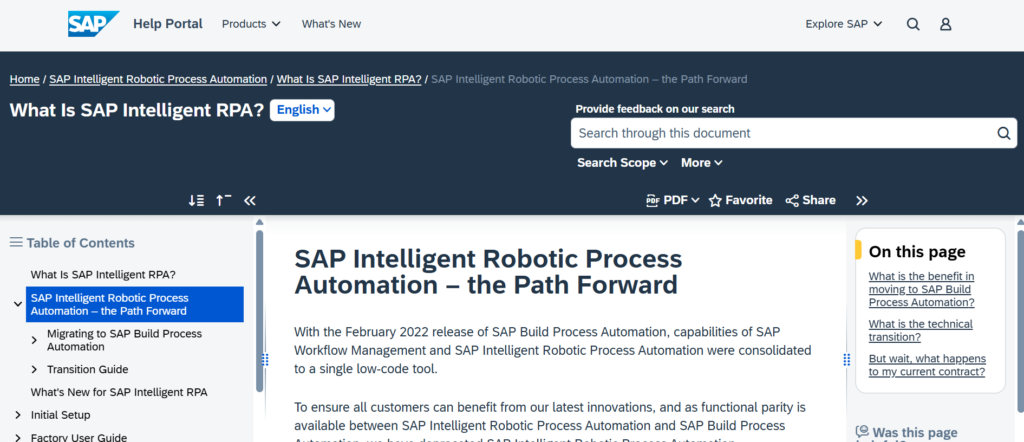
SAP Intelligent RPA – “Enterprise Automation Built for SAP Ecosystems”
In most detailed SAP Intelligent RPA review insights, one thing becomes clear immediately. It is purpose-built for businesses already using SAP systems.
Among all RPA tools for SMEs in the UK, SAP Intelligent RPA is highly effective for organisations that rely on SAP for operations like finance, supply chain, and HR. It is widely used across the UK by SMEs and enterprises embedded in the SAP ecosystem.
Key Features
Deep SAP Integration
SAP Intelligent RPA integrates seamlessly with SAP applications.
This allows UK businesses to automate workflows directly within their existing systems. In most SAP Intelligent RPA review breakdowns, this is its biggest advantage.
Low-Code Bot Builder
The platform includes a low-code interface for creating automation workflows.
This enables UK teams to build bots without extensive coding knowledge, making it accessible to business users.
Pre-Built Content and Bots
SAP offers pre-configured automation content for common business processes.
This helps UK SMEs deploy automation faster without building everything from scratch.
AI and Machine Learning Capabilities
SAP Intelligent RPA includes AI features for handling complex workflows.
This allows UK businesses to automate processes involving data interpretation and decision-making.
Centralised Bot Management
The platform provides a central dashboard for managing bots and workflows.
This ensures full visibility and control for UK teams.
Pros & Cons
| Pros | Cons |
| Strong SAP integration | Limited outside SAP |
| Low-code tools | Expensive |
| Pre-built content | Learning curve |
| Scalable automation | Niche use |
Pricing
SAP Intelligent RPA pricing is custom.
Costs depend on:
- SAP environment
- Number of bots
- Features required
Best For UK SMEs Using SAP Systems
SAP Intelligent RPA is ideal for businesses already invested in SAP.
- SMEs — automate SAP workflows
- Finance teams — streamline processes
- HR teams — automate onboarding
- Enterprises — scale operations
Verdict:
If your business runs on SAP, this is one of the most effective RPA tools for SMEs in the UK. Focus on automating core SAP processes first for maximum ROI.
How to Use SAP Intelligent RPA for UK Business Workflows
A practical setup for UK SMEs:
- Identify SAP-based processes
- Use pre-built bots
- Customise workflows
- Monitor centrally
This ensures efficient automation within SAP systems.
Quick tip: Start with finance processes like invoice handling to quickly demonstrate value.
Best Alternate Tool
If you are comparing SAP Intelligent RPA alternatives, Automation Anywhere is a strong option.
In SAP Intelligent RPA vs Automation Anywhere comparisons, SAP is stronger for SAP users, while Automation Anywhere offers broader flexibility.
Tungsten RPA (Kofax) – “Document-Centric Automation with Intelligent Capture”

In the most detailed Tungsten RPA review insights, one thing becomes obvious straight away. It is built for businesses that deal heavily with documents, data extraction, and compliance workflows.
Previously known as Kofax RPA, this tool is highly regarded among RPA tools for SMEs in the UK that need strong document processing capabilities. It is widely used across the UK in finance, insurance, and legal sectors.
Key Features
Intelligent Document Processing
Tungsten RPA excels at extracting and processing data from documents.
This includes invoices, forms, and contracts. In most Tungsten RPA review breakdowns, this feature is highlighted as its biggest strength.
Robotic Process Automation
The platform allows automation of repetitive, rule-based tasks.
This helps UK SMEs reduce manual work across departments like finance and operations.
AI and OCR Capabilities
Tungsten RPA uses OCR and AI to interpret unstructured data.
This allows UK businesses to automate processes that involve scanned documents and PDFs.
Workflow Automation Tools
The platform supports end-to-end workflow automation.
This ensures processes run smoothly across systems and teams.
Strong Compliance Features
Tungsten RPA includes audit trails and compliance tools.
This makes it ideal for UK businesses handling sensitive data and regulatory requirements.
Pros & Cons
| Pros | Cons |
| Strong document processing | Expensive |
| AI and OCR features | Learning curve |
| Good for compliance | Setup complex |
| Scalable automation | Niche focus |
Pricing
Tungsten RPA pricing is custom.
Costs depend on:
- Number of bots
- Document volume
- Features required
Best For UK SMEs Handling Document-Heavy Workflows
Tungsten RPA is ideal for businesses dealing with large volumes of documents.
- Finance teams — process invoices
- Legal firms — manage contracts
- Insurance companies — handle claims
- SMEs — automate document workflows
Verdict:
If your business relies on document processing, this is one of the most specialised RPA tools for SMEs UK. Start with high-volume document workflows to maximise ROI.
How to Use Tungsten RPA for UK Business Workflows
A practical setup for UK SMEs:
- Identify document-heavy processes
- Use OCR to extract data
- Automate workflows
- Monitor compliance and performance
This ensures efficient and accurate automation.
Quick tip: Focus on invoice and contract processing first to quickly reduce manual workload.
Best Alternate Tool
If you are comparing Tungsten RPA alternatives, WorkFusion is a strong option.
In Tungsten RPA vs WorkFusion comparisons, Tungsten is stronger in document capture, while WorkFusion offers more AI-driven automation.
Nintex RPA – “Process Automation Built for Business Users”
In the most detailed Nintex RPA review insights, one thing becomes clear straight away. It is designed for business users who want to automate workflows without relying heavily on IT teams.
Among all RPA tools for SMEs UK, Nintex stands out for its focus on ease of use and process-driven automation. It is widely used by UK SMEs that want to streamline operations quickly without complex setup.
Key Features
Drag-and-Drop Workflow Builder
Nintex provides a visual interface for building automation workflows.
This allows UK teams to create processes without coding. In most Nintex RPA review breakdowns, this feature is praised for its simplicity and accessibility.
End-to-End Process Automation
Nintex enables businesses to automate complete workflows across departments.
This helps UK SMEs reduce manual work and improve operational efficiency.
Integration with Business Applications
Nintex integrates with popular tools like CRM systems, SharePoint, and cloud apps.
This allows UK businesses to connect systems and automate workflows seamlessly.
Document Generation and Management
Nintex includes tools for document automation and management.
This is especially useful for UK businesses handling contracts, invoices, and forms.
Process Mapping and Optimisation
Nintex provides tools to map and analyse business processes.
This helps UK SMEs identify inefficiencies and improve workflows over time.
Pros & Cons
| Pros | Cons |
| Easy to use | Expensive |
| Strong workflow tools | Limited RPA depth |
| Good integrations | Learning curve |
| Document automation | Setup required |
Pricing
Nintex pricing is custom.
Costs depend on:
- Number of users
- Workflow complexity
- Features required
Best For UK SMEs Wanting Simple Process Automation
Nintex is ideal for businesses that want straightforward workflow automation.
- SMEs — automate daily processes
- HR teams — manage onboarding
- Finance teams — handle approvals
- Operations teams — streamline workflows
Verdict:
If you want an easy-to-use platform among RPA tools for SMEs in the UK, Nintex is a strong choice. Start with simple workflows and expand as needed.
How to Use Nintex for UK Business Workflows
A practical setup for UK SMEs:
- Map out business processes
- Build workflows using drag-and-drop tools
- Integrate apps and systems
- Automate approvals and documents
This ensures quick and effective automation.
Quick tip: Use Nintex’s process mapping tools before automation to identify the most impactful workflows.
Best Alternate Tool
If you are comparing Nintex alternatives, Microsoft Power Automate is a strong option.
In Nintex vs Power Automate comparisons, Nintex is easier for process mapping, while Power Automate offers deeper integrations with Microsoft tools.
IBM Robotic Process Automation – “AI-Driven Automation Backed by Enterprise Power”
In most detailed IBM RPA review insights, one thing becomes obvious straight away. It combines traditional robotic process automation with powerful AI capabilities from IBM’s ecosystem.
Among all RPA tools for SMEs UK, IBM RPA is ideal for businesses that want intelligent automation with strong analytics and scalability. It is widely used across the UK by organisations looking for advanced automation solutions.
Key Features
AI-Powered Automation
IBM RPA integrates AI to handle complex and decision-based tasks.
This allows UK businesses to automate processes that go beyond simple rule-based workflows. In most IBM RPA review breakdowns, this is a major differentiator.
Low-Code Bot Development
The platform offers a low-code interface for building bots.
This makes it easier for UK SMEs to create automation workflows without extensive coding knowledge.
Intelligent Document Processing
IBM RPA includes tools for extracting and processing data from documents.
This is useful for UK businesses dealing with invoices, contracts, and compliance paperwork.
Advanced Analytics and Insights
IBM provides detailed analytics to track automation performance.
This helps UK teams optimise workflows and improve efficiency over time.
Integration with IBM Ecosystem
IBM RPA integrates with other IBM tools and enterprise systems.
This allows UK businesses to build a connected automation environment.
Pros & Cons
| Pros | Cons |
| Strong AI capabilities | Expensive |
| Advanced analytics | Complex setup |
| Scalable platform | Learning curve |
| Enterprise features | Overkill for small teams |
Pricing
IBM RPA pricing is custom.
Costs depend on:
- Number of bots
- Features required
- Deployment scale
Best For UK SMEs Wanting AI-Driven Automation
IBM RPA is ideal for businesses that need intelligent automation capabilities.
- SMEs — automate complex workflows
- Enterprises — scale automation
- Finance teams — process documents
- Operations teams — improve efficiency
Verdict:
If you want advanced AI-powered automation, IBM RPA is one of the most powerful RPA tools for SMEs in the UK. Focus on high-value workflows to maximise ROI.
How to Use IBM RPA for UK Business Workflows
A practical setup for UK SMEs:
- Identify complex processes
- Build bots using low-code tools
- Integrate AI capabilities
- Monitor performance with analytics
This ensures intelligent and scalable automation.
Quick tip: Use IBM’s analytics tools to continuously refine automation and improve efficiency.
Best Alternate Tool
If you are comparing IBM RPA alternatives, Automation Anywhere is a strong option.
In IBM RPA vs Automation Anywhere comparisons, IBM offers stronger AI capabilities, while Automation Anywhere is more cloud-focused.
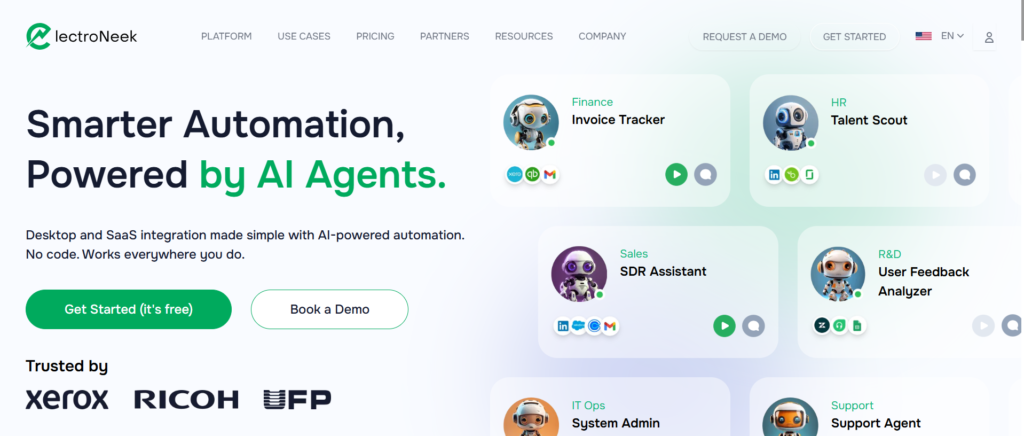
ElectroNeek – “RPA Built Specifically for SMEs and MSPs”
In the most detailed ElectroNeek review insights, one thing becomes clear immediately. It is designed specifically for small and medium-sized businesses, not just large enterprises.
Among all RPA tools for SMEs in the UK, ElectroNeek stands out for its affordability, simplicity, and focus on managed service providers (MSPs). It is widely adopted by UK SMEs looking for cost-effective automation without enterprise complexity.
Key Features
SME-Focused Automation Platform
ElectroNeek is built specifically for SMEs and service providers.
This makes it easier for UK businesses to deploy automation without the heavy infrastructure required by enterprise tools. In most ElectroNeek review breakdowns, this is a key advantage.
No-Code and Low-Code Automation
The platform offers both no-code and low-code tools.
This allows UK teams to build automation workflows regardless of technical expertise, making it accessible across departments.
Multi-Client Management (MSP-Friendly)
ElectroNeek allows agencies and MSPs to manage multiple clients from one platform.
This is particularly useful for UK service providers offering automation as a service.
Cloud-Based Deployment
ElectroNeek operates in the cloud, reducing setup complexity.
This allows UK SMEs to start automating quickly without significant IT investment.
Affordable Pricing Model
Compared to many ElectroNeek alternatives, the pricing is more accessible.
This makes it one of the most budget-friendly RPA tools for SMEs in the UK.
Pros & Cons
| Pros | Cons |
| Affordable pricing | Limited enterprise features |
| SME-focused | Smaller ecosystem |
| Easy to use | Fewer integrations |
| Cloud-based | Still growing |
Pricing
ElectroNeek offers transparent pricing compared to many competitors.
Plans typically include:
- Subscription-based pricing
- Options for MSPs
- Scalable packages
Best For UK SMEs and Agencies Offering Automation Services
ElectroNeek is ideal for smaller businesses and service providers.
- SMEs — affordable automation
- Agencies — manage multiple clients
- MSPs — offer automation services
- Startups — quick deployment
Verdict:
If you want a cost-effective solution AAAA, ElectroNeek is a strong contender. Start with simple workflows and scale as your business grows.
How to Use ElectroNeek for UK Business Workflows
A practical setup for UK SMEs:
- Identify repetitive tasks
- Build workflows using no-code tools
- Deploy via cloud platform
- Monitor and optimise processes
This ensures quick and affordable automation.
Quick tip: Agencies can use ElectroNeek to create automation packages and resell them to clients.
Best Alternate Tool
If you are comparing ElectroNeek alternatives, UiPath is a strong option.
In ElectroNeek vs UiPath comparisons, ElectroNeek is more affordable, while UiPath offers more advanced features.
Rocketbot – “Flexible and Affordable RPA for Growing Businesses”
In the most detailed Rocketbot review insights, one thing stands out quickly. It is designed to offer powerful automation at a lower cost compared to many enterprise tools.
Among all RPA tools for SMEs UK, Rocketbot is a strong option for businesses that want flexibility without high upfront investment. It is widely used by UK SMEs looking for scalable automation on a budget.
Key Features
Modular Automation Platform
Rocketbot allows users to build automation using modules.
This gives UK businesses flexibility to customise workflows based on their needs. In most Rocketbot review breakdowns, this modular approach is a key advantage.
Low-Code Bot Development
The platform provides a low-code interface for creating bots.
This enables UK teams to automate processes without extensive technical expertise, making it accessible across departments.
Cross-Platform Automation
Rocketbot works across web, desktop, and legacy systems.
This allows UK SMEs to automate workflows across multiple environments efficiently. Compared in Rocketbot vs UiPath discussions, Rocketbot is often praised for affordability.
Integration Capabilities
Rocketbot integrates with APIs, databases, and third-party tools.
This ensures UK businesses can connect systems and automate processes seamlessly.
Cost-Effective Licensing
Rocketbot offers competitive pricing compared to many Rocketbot alternatives.
This makes it one of the more budget-friendly RPA tools for SMEs in the UK.
Pros & Cons
| Pros | Cons |
| Affordable pricing | Smaller ecosystem |
| Flexible modules | Limited brand recognition |
| Easy to scale | Learning curve |
| Cross-platform support | Fewer integrations |
Pricing
Rocketbot offers relatively transparent and flexible pricing.
Costs depend on:
- Number of bots
- Modules used
- Deployment scale
Best For UK SMEs Looking for Affordable Scalability
Rocketbot is ideal for businesses that want scalable automation without high costs.
- SMEs — automate workflows
- Startups — reduce manual tasks
- Agencies — manage processes
- Operations teams — improve efficiency
Verdict:
If budget is a concern, Rocketbot is one of the most practical RPA tools for SMEs in the UK. Start small and expand as your automation needs grow.
How to Use Rocketbot for UK Business Workflows
A practical setup for UK SMEs:
- Identify repetitive processes
- Build bots using modules
- Integrate systems
- Monitor and optimise workflows
This ensures efficient and scalable automation.
Quick tip: Use Rocketbot’s modular system to only pay for the features you actually need.
Best Alternate Tool
If you are comparing Rocketbot alternatives, ElectroNeek is a strong option.
In Rocketbot vs ElectroNeek comparisons, Rocketbot offers more flexibility, while ElectroNeek is simpler for beginners.
UiPath – “The Industry-Leading RPA Platform for End-to-End Automation”
In most detailed UiPath review insights, one thing is consistently clear. It is one of the most widely adopted and versatile platforms among all RPA tools for SMEs UK.
UiPath is known for its powerful automation capabilities, strong community, and flexibility across industries. It is widely used by UK SMEs and enterprises looking to scale automation efficiently.
Key Features
Visual Workflow Designer
UiPath offers a drag-and-drop interface for building automation workflows.
This allows UK teams to design processes visually without heavy coding. In most UiPath review breakdowns, this feature is praised for balancing power and usability.
Attended and Unattended Automation
UiPath supports both attended and unattended bots.
This gives UK SMEs flexibility to automate tasks with or without human involvement, depending on the workflow.
AI and Machine Learning Integration
UiPath includes AI capabilities for handling complex processes.
This allows UK businesses to automate tasks involving data interpretation, document processing, and decision-making.
Extensive Integration Ecosystem
UiPath integrates with a wide range of applications, APIs, and systems.
This makes it one of the most flexible UiPath alternatives when it comes to cross-platform automation.
Strong Community and Marketplace
UiPath has a large global community and marketplace of pre-built components.
This helps UK SMEs accelerate automation without starting from scratch.
Pros & Cons
| Pros | Cons |
| Highly scalable | Can be complex |
| Strong community | Pricing can rise |
| Powerful features | Learning curve |
| Flexible automation | Setup required |
Pricing
UiPath offers a free Community Edition.
Paid plans vary based on:
- Number of users
- Bots deployed
- Enterprise features
Best For UK SMEs Wanting Scalable, All-in-One Automation
UiPath is ideal for businesses that want flexibility and long-term scalability.
- SMEs — scale automation
- Enterprises — manage complex workflows
- IT teams — integrate systems
- Operations teams — improve efficiency
Verdict:
If you want a complete automation solution, UiPath is one of the most powerful RPA tools for SMEs UK. Start with the free version and scale as needed.
How to Use UiPath for UK Business Workflows
A practical setup for UK SMEs:
- Identify repetitive processes
- Build workflows using Studio
- Deploy bots across departments
- Monitor with analytics
This ensures efficient and scalable automation.
Quick tip: Use UiPath’s marketplace to quickly deploy pre-built automation components.
Best Alternate Tool
If you are comparing UiPath alternatives, Automation Anywhere is a strong option.
In UiPath vs Automation Anywhere comparisons, UiPath offers more flexibility, while Automation Anywhere is more cloud-focused.
Conclusion: Choosing the Right RPA Tools for SMEs UK
If you have made it this far, you now understand one thing clearly. Not all RPA tools for SMEs in the UK are created equal.
Some are built for simplicity like Zapier and Nintex. Others are designed for enterprise-grade automation like UiPath, Blue Prism, and Pega. And then you have specialised tools like Tungsten RPA and WorkFusion for document-heavy workflows.
The key is simple. Match the tool to your business needs.
If you are just starting, go with easy-to-use platforms. If you are scaling, invest in powerful, flexible solutions. And if compliance or data is critical, choose tools with strong governance and AI capabilities.
Call to Action
If you are serious about implementing RPA tools for SMEs UK, you need more than just software. You need the right strategy.
That is where Pearllemon comes in.
Pearllemon works with UK SMEs to:
- Identify automation opportunities
- Implement the right RPA tools
- Optimise workflows for efficiency
- Scale automation across departments
Whether you are just starting or looking to expand, Pearllemon ensures your automation delivers real ROI.
Service-Based FAQs
1. What are RPA tools for SMEs in the UK?
RPA tools for SMEs UK are software platforms that automate repetitive business processes using bots.
2. Are RPA tools expensive for small businesses?
Some tools are costly, but many offer affordable plans or free versions suitable for UK SMEs.
3. Which RPA tool is best for beginners?
Zapier and Microsoft Power Automate are great starting points due to ease of use.
4. Can RPA tools integrate with existing systems?
Yes, most RPA tools integrate with CRMs, ERPs, and other business applications.
5. Do RPA tools require coding skills?
Many tools offer no-code or low-code interfaces, making them accessible to non-technical users.
6. How long does it take to implement RPA?
Simple workflows can be automated in days, while complex implementations may take weeks.
7. Are RPA tools secure?
Yes, most platforms include security features like encryption and access controls.
8. What processes can be automated?
Common examples include data entry, invoicing, customer support, and reporting.
9. How do I choose the right RPA tool?
Consider your budget, technical skills, and business requirements before choosing.
10. Can RPA scale with my business?
Yes, most RPA tools are designed to scale as your business grows.